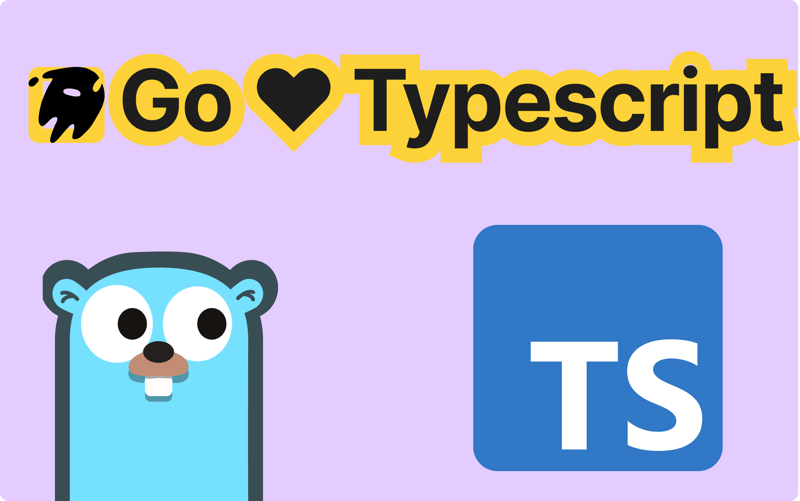
When TypeScript Met Go: A Love Story of Speed and Efficiency
A seismic announcement recently rocked the developer community: TypeScript is officially migrating its compiler to Go!

A seismic announcement recently rocked the developer community: TypeScript is officially migrating its compiler to Go!
TypeScript creator Anders Hejlsberg personally delivered this bombshell news, with promises that left jaws dropping:
- 10x performance improvement
- 50% reduction in memory usage
“Why Not Rust?” — The Method Behind the Madness
The community’s first reaction was predictable skepticism: why not choose the darling of systems programming, Rust?
Anders’s response was refreshingly straightforward:
- Garbage collection is non-negotiable: The existing TypeScript codebase relies on automatic garbage collection, which Go natively supports.
- Concurrency model matters: Go’s shared memory concurrency perfectly aligns with the compiler’s parallel processing needs
- Familiar code style: Go’s functional approach feels more at home with TypeScript’s existing codebase, making migration less painful
What seemed like an internal technical decision by the TypeScript team soon blossomed into a heartwarming tale of technical courtship that captivated the entire developer community.
When the Go Team Faced Their First “In-Law Test”: Overnight Heroics for Better Performance
Shortly after the TypeScript compiler’s Go port was released, a developer named Jorropo filed issue #72815 in the Go official repository:

The issue hit a nerve: Go’s compiler was painfully slow when compiling the TypeScript compiler’s internal/checker package, with poor multi-core utilization.
It was as if the Go team had just been handed their first challenge from the in-laws.
Go team members (including Jake Bailey, dr2chase, thepudds, and others) sprang into action, launching an optimization blitz against the clock.
The results were spectacular: a 5x speed improvement in just days!
go1.24.0:      91.792s
cl-657179-ps1: 17.578s
Go contributor thepudds confidently stated this was just the beginning — they can optimize the compiler’s escape analysis further, promising even more significant performance gains in the future.
Even more impressively, the Go team incorporated the TypeScript-Go compiler project into the Go compiler’s benchmark suite, ensuring this technical marriage remains strong for years to come.
Former Go Team Member’s Epic Commentary: This Is How Go Rolls
Former Go team member Filippo Valsorda captured the Go community’s ethos perfectly in his Bluesky post:
“Go community: Your new compiler takes over a minute to compile? Unacceptable! That isn’t very comfortable! That’s not how we do things.
Two days later: Work in progress — 5x speedup.
Critics: Why Go?”
No one’s complaining about the Go community on this one.
Photo by Van Tay Media on Unsplash
Why did the Go team react so quickly this time?
Strategic importance: TypeScript chose Go as the basis of its compiler, which recognizes Go’s language capabilities and gives Go a wider exposure and application scenario.
Reputation maintenance: When the TypeScript team chooses Go instead of Rust or other languages, the Go team must prove that this choice is correct. Resolving performance problems quickly is the key to maintaining the Go language’s reputation.
Business benefits: Google (the creator of Go) uses TypeScript in many projects, and there may be a strong internal demand to ensure the smooth progress of this integration.
The appeal of technical challenges: Optimizing compiler performance is a technically interesting and valuable challenge that can attract the investment of top engineers.
Community pressure: Public GitHub issues and community attention have created positive response pressure for the Go team.
A Power Couple With Unlimited Potential
This union between TypeScript and Go represents more than a mere technical migration — it’s a perfect fusion of two powerhouse communities.
As Anders wisely noted, no programming language is perfect. Choosing Go was a pragmatic decision based on TypeScript’s real-world needs and engineering considerations.
The Go community’s lightning-fast response and problem-solving prowess again demonstrate open-source collaboration’s incredible power.
We have every reason to be excited when TypeScript’s widespread adoption meets Go’s performance efficiency. This power couple is poised to deliver a more efficient, more powerful development experience, injecting fresh energy into the future of software development!
What are your thoughts on TypeScript’s migration to Go? Share your perspective in the comments below!