Tim Cook’s Last WWDC
Tim Cook’s Last WWDC. APPLE Tim Cook’s Last WWDC Tomorrow, Tim Cook walks onto the Steve Jobs Theater stage for the last time as Apple’s CEO. He’ll probabl。
APPLE
Tim Cook’s Last WWDC
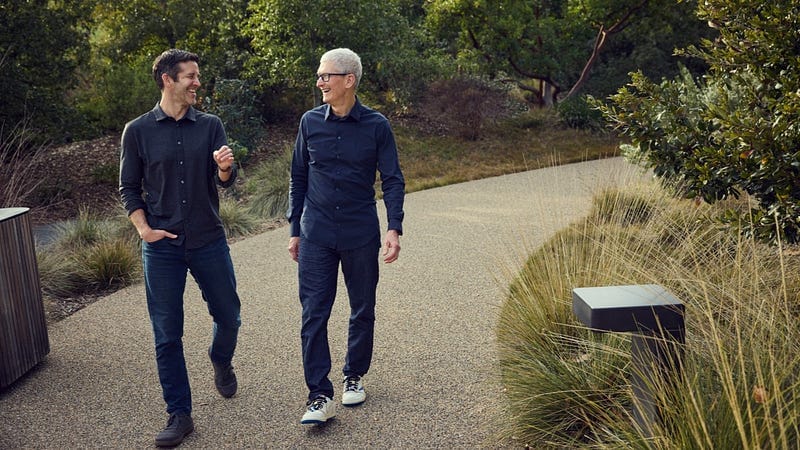
Tomorrow, Tim Cook walks onto the Steve Jobs Theater stage for the last time as Apple’s CEO.
He’ll probably wear the same dark crewneck. He’ll probably flash the same slightly tense smile. He’ll probably open with some version of “we have some incredible things to share.”
This time it lands differently.
Two months ago, Apple made it official. Cook is stepping down as CEO to become Executive Chairman, and John Ternus, currently SVP of Hardware Engineering, takes over. WWDC 2026 is Cook’s goodbye.
He spent 13 years rebuilding Apple. The things he announces tomorrow will shape it for the next five, and most of them won’t ship on his watch.
What he inherited in 2011
August 24, 2011. Steve Jobs resigned. Cook took over. It was probably the most anxious day in Apple’s modern history.
Jobs wasn’t just a CEO. He was Apple’s product soul and its public face, and when he left, one question hung over everything: can Apple survive without Steve Jobs?
The company was worth about $350 billion. The iPhone 4 had been out a year. The iPad wasn’t two years old. The App Store had 425,000 apps. Annual revenue sat around $108 billion.
It looked enormous. Looking back, Cook had inherited a company that hadn’t yet found its next decade.
Thirteen years of results
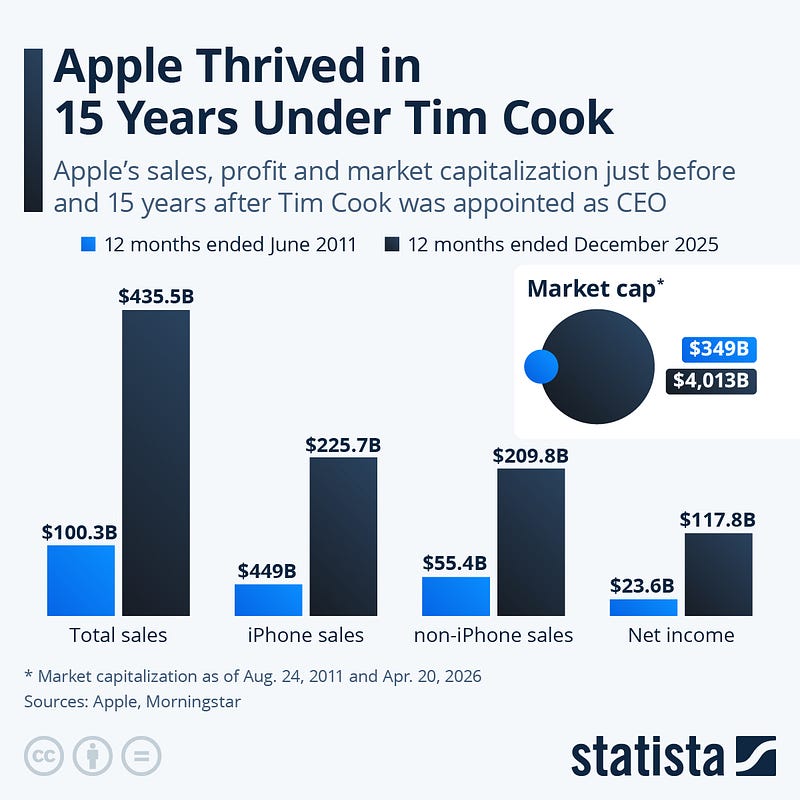
Start with the numbers, because they’re the part nobody argues about.
Under Cook, Apple’s market cap went from $350 billion to over $4 trillion, a roughly 1,900% increase. It became the first company in history past $4 trillion. The stock did the thing almost no large-cap company manages: it kept compounding.
But the market cap is just the scoreboard. How he got there is the interesting part.
New product categories. Jobs never shipped AirPods or Apple Watch. Cook did, and both turned into billion-dollar businesses. AirPods reset the wireless earbuds market. The Apple Watch has been the world’s best-selling smartwatch every year since its launch.
Services. In 2015, services revenue was a rounding error. By 2025, it was $109 billion, big enough to rank as a Fortune 500 company on its own. Just last week, Apple said the App Store ecosystem had generated $1.4 trillion in developer billings.
Apple Silicon. In 2020, Cook announced that the Mac would move to in-house chips. Three years later, the switch was done, and the M-series forced the rest of the PC industry to rethink what “good performance” even meant.
Cook never tried to be the next Jobs. His tools were supply chains, systems engineering, and a quarterly cadence that almost never slipped. Not glamorous. But the output speaks for itself.
What’s expected at WWDC 2026
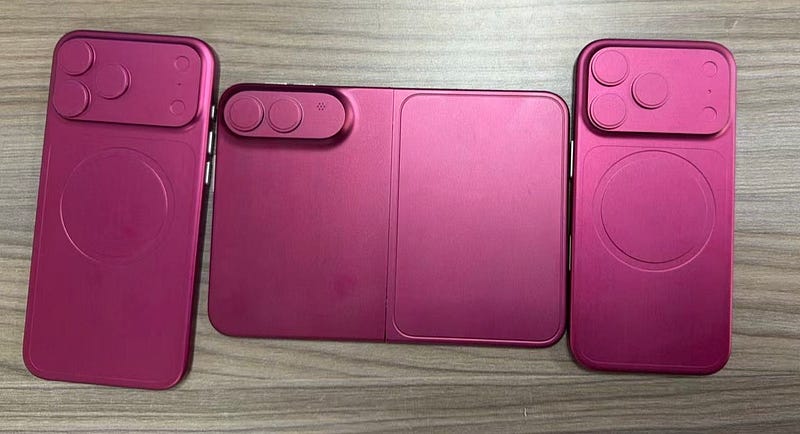
iOS 27: laying the groundwork for a foldable iPhone
There’s one detail in the iOS 27 rumors most people are skipping past.
Apple is reportedly bringing split-screen multitasking to the iPhone, a feature that’s been iPad-only until now. On its own, it sounds like a minor productivity tweak. Put it next to the other open secret, that a foldable iPhone is expected later this year, and it reads very differently. Wide screens need side-by-side apps. iOS 27’s multitasking is the software foundation for a device that doesn’t exist yet.
Siri is reportedly getting the bigger overhaul. It’s leaving its embedded-assistant role to become a standalone app, with an interface that looks more like ChatGPT or Gemini than the Siri we know. And Apple is reportedly adding an “Extensions” framework that lets third-party models, ChatGPT and Gemini among them, plug straight into Siri. Apple used to never allow that. It’s changing.
The Photos app is expected to gain AI outpainting, smart lighting, and clarity enhancement, all of it processed on-device. Very Cook-era Apple: yes to the AI features, no to shipping your data to the cloud.
macOS 27: the one that overrules Steve Jobs
In 2010, on the record at a product event, Jobs said touchscreen computers were a bad ergonomic idea. Your arm gets tired.
Tomorrow, Cook is reportedly going to contradict him, quietly and completely.
macOS 27 is expected to ship with a native touch layer, the groundwork for a touchscreen MacBook Pro later this year. Touch is reportedly limited to high-end models, priced to keep a clear distance from the iPad Pro.
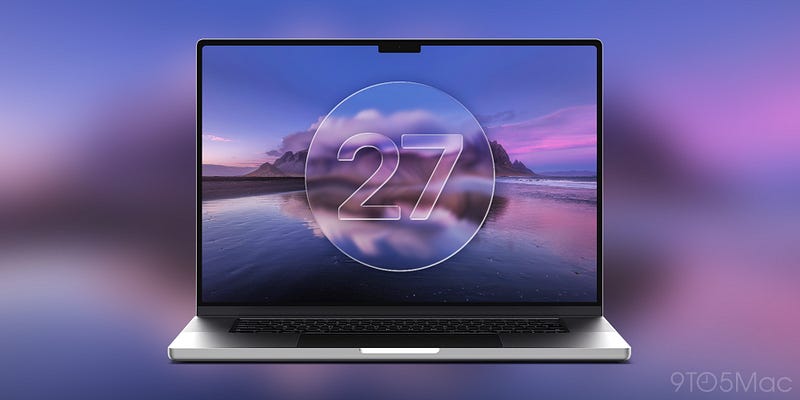
A pre-release macOS 27 interface mockup. Photo: 9to5Mac
macOS 27 is also expected to drop support for every Intel Mac. If you’re on a 2019 MacBook Pro, this is the last system update you’ll get. The Apple Silicon transition, which started in 2020, closes tomorrow.
M5 Ultra: the next piece of the chip roadmap
The M5 Ultra is expected to debut at WWDC 2026, reportedly a 36-core CPU and 80-core GPU, likely headed for a new Mac Studio.
For most people, this chip changes nothing day-to-day. What it tells you is that Apple Silicon is still on schedule. In the chip business, that alone is worth noticing.
Why this might be Apple’s most important WWDC in a decade
Line up the expected announcements, and a pattern shows up. None of them are really 2026 features. They’re all five-year bets.
A foldable iPhone isn’t a new phone. It’s Apple’s move into the next form factor, and if it works, it redraws what the flagship line looks like, the way the iPhone redrew what a phone was in 2007.
A touchscreen Mac isn’t about adding a screen. It’s about where the line between Mac and iPad goes. In the Jobs era, those were separate categories. Cook is letting them bleed into each other on purpose.
A rebuilt Siri is Apple’s late, deliberate answer to AI. For three years, the assumption was that Apple had fallen behind OpenAI, Google, and Meta. Its reply isn’t better than an LLM. It’s a platform meant to work with all of them. Whether that pays off, ask again in five years.
Cook’s legacy: the man who planted trees
In April, Cook sent Apple employees an open letter announcing the handoff. One line:
“Every single day I have worked at Apple has been the greatest privilege of my working life.”
So how does history grade him?
He didn’t invent the iPhone. He never pulled a laptop out of a manila envelope. The Jobs theatrics, the sense that you were watching magic, Cook never had it and never pretended to.
What he did was harder. He kept Apple winning in a world without Steve Jobs.
He also reversed several of Jobs’s best-known calls: big-screen iPhones (Jobs said nobody wanted one), open AI integrations (the opposite of Apple’s closed-ecosystem instinct), touchscreen Macs (Jobs flatly opposed them). Every reversal was criticized at the time. Everyone turned out right.
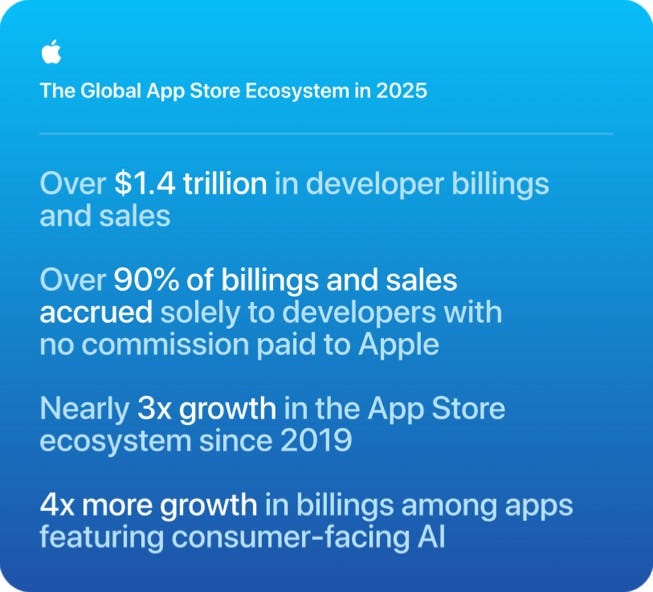
Apple announced $1.4 trillion in App Store developer billings for 2025. Photo: Apple Newsroom
The method was always the same: wait until the technology and the market are both ready, then move, and do it better than whoever got there first. That’s not conservatism. It’s a slower kind of confidence.
Tomorrow runs on the same logic. Samsung has shipped foldables for five years. Apple arrives now. Microsoft pushed touchscreen PCs for a decade before Apple tried one. OpenAI had a two-year head start on generative AI before Apple rebuilt Siri. Cook doesn’t chase trends. He waits for them to harden into infrastructure, then builds on top.
An ending that’s really a beginning
After tomorrow’s keynote, Cook steps off that stage.
He keeps the Executive Chairman title. He’ll still turn up in Apple announcements. But the spot on stage is Ternus’s now.
The foldable iPhone launch, Ternus hosts. The touchscreen MacBook reveal, Ternus on stage. Whether the rebuilt Siri can actually hold its own against the rest of the AI field is Ternus’s problem now.
Cook planted those trees. He’ll watch someone else harvest them from across the room, holding the title of Executive Chairman. That’s not a sad ending. That’s what a great builder looks like when the building is done.
Apple’s story doesn’t get a final chapter. Tomorrow it just turns a page.
Photos: Apple Newsroom, 9to5Mac, MacRumors, Statista