The Widow Who Refused To Let Stanford Die
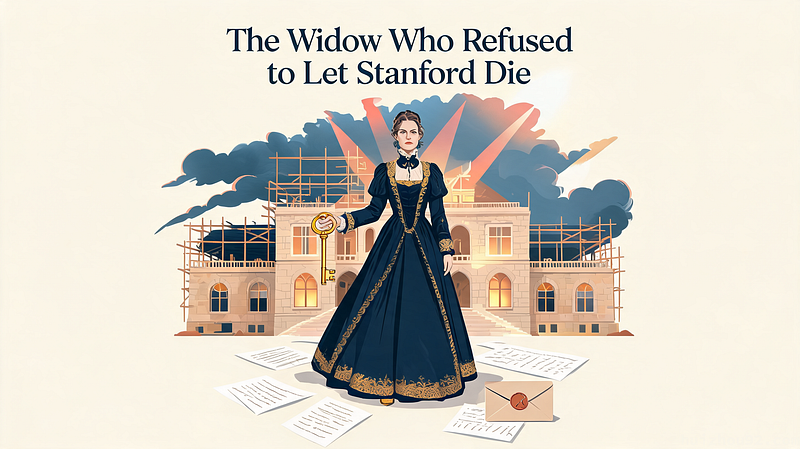
The Widow Who Refused To Let Stanford Die. IT HISTORY The Widow Who Refused To Let Stanford Die When Everyone Told Jane Stanford to close the University, S。
IT HISTORY
The Widow Who Refused To Let Stanford Die
When Everyone Told Jane Stanford to close the University, She Chose Poverty and Saved it
Silicon Valley has a brain, and it sits on an old horse farm in Palo Alto. For more than a century, the people, patents, and companies that run the tech industry — Google, Cisco, Sun, Yahoo, LinkedIn, Instagram, and tens of thousands more — have come out of Stanford University. This is the story of how that brain got built, in five parts.
June 22, 1893. Palo Alto, California.
The telegram reached the Stanford mansion on a warm summer morning: Leland Stanford — railroad baron, former governor, United States senator — had died in his sleep at sixty-nine.
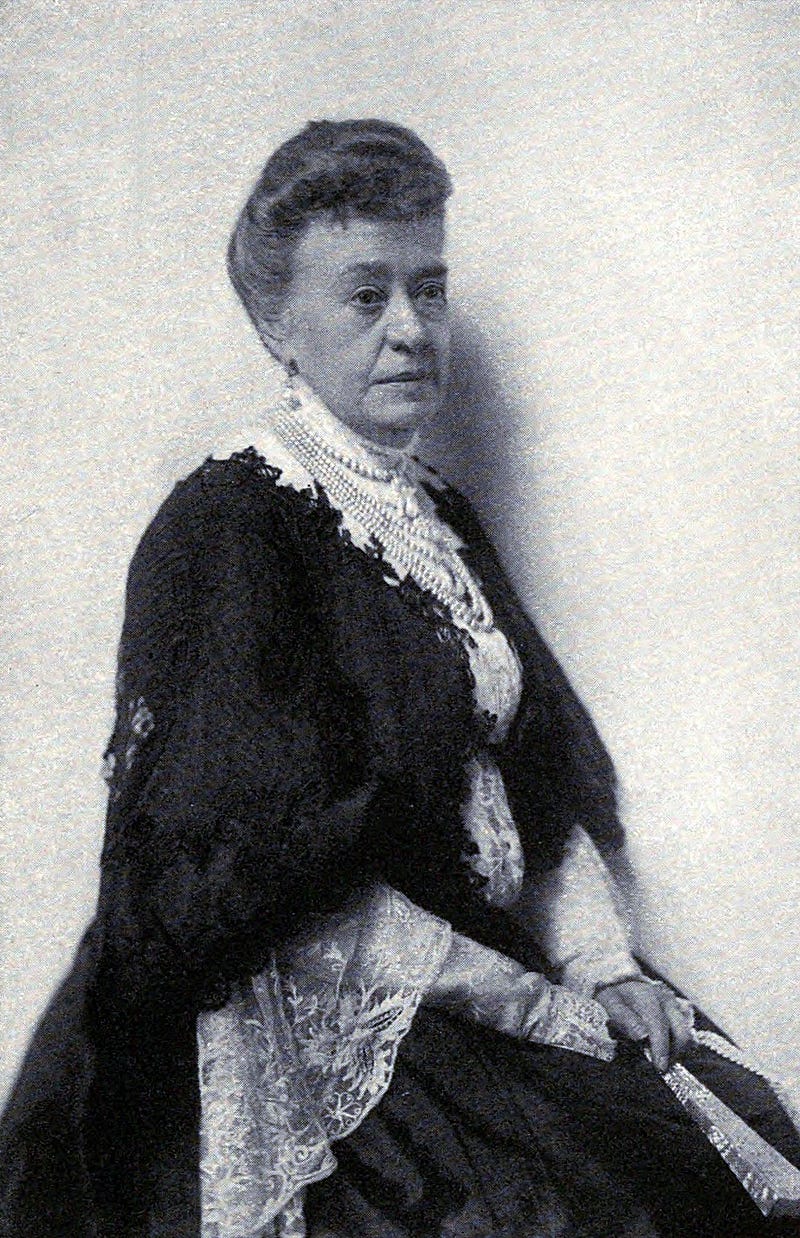
Jane Lathrop Stanford read the words three times and set the telegram down on the mahogany desk. Then, dry-eyed, she called for her lawyer.
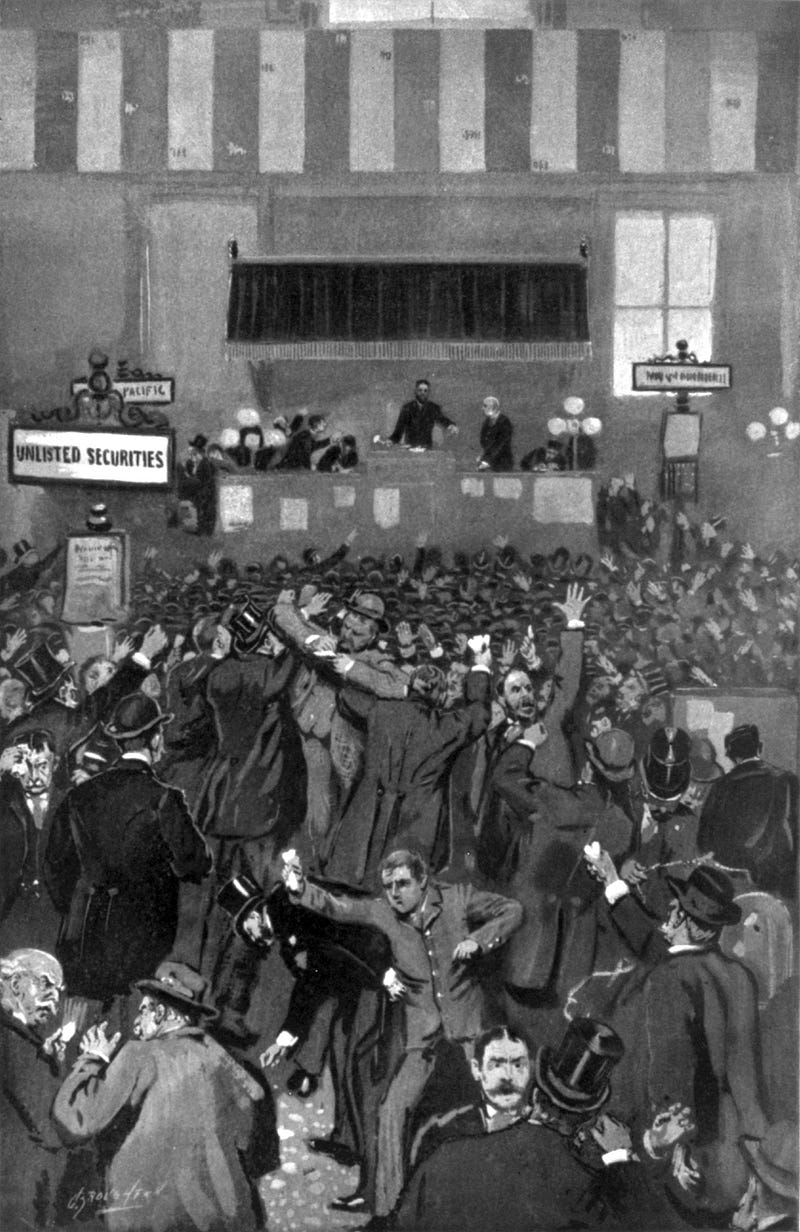
Three days later, the trustees of Leland Stanford Junior University gathered in an oak-paneled room to face a catastrophe. Leland’s estate, the financial bedrock of the whole institution, was frozen in probate. The federal government had filed a $15 million claim against it, seeking repayment of loans made to the Central Pacific Railroad decades earlier. The Panic of 1893 was eating the American economy alive, banks were failing by the dozen, and the university had exactly zero dollars it could touch.
The trustees reached a unanimous conclusion: close the university.
Jane Stanford rose from her chair.
“No.”
It was one word, quietly said. But Jane had spent thirty-four years beside one of the most powerful men in America — reviewing his contracts, advising on his strategy, running a household that hosted senators, industrialists, and a president — and she was no silent partner. The university named for her dead son was the last thing she had left, and she would not let it die.
A Fortune Locked in Probate
The financial reality was brutal. The Stanford estate was worth an estimated $50 million in 1893 dollars, yet probate had locked every cent, and the government’s claim on the railroad’s construction loans threatened to swallow nearly a third of it while creditors circled and lawyers billed.
Jane’s own liquid assets came down to a single thing: a life-insurance annuity paying $10,000 a year. Against the university’s operating costs of roughly $150,000 a year, that covered about seven percent, and the trustees concluded the numbers simply could not be made to work.
Jane read the same numbers and drew a different conclusion. She dismissed fourteen of her seventeen servants, sold her carriages and horses, and moved from the Nob Hill mansion into a modest cottage on the Palo Alto farm. She cut her personal spending to $350 a year — about a skilled laborer’s wage — mended her own dresses, and let her social calendar go dark.
Every remaining dollar of the annuity went to the university. It paid faculty salaries, kept the doors open, and heated classrooms for the 500 students still enrolled, while the woman who had once entertained presidents at her table counted pennies to keep a college alive. The trustees, stunned, made her a promise: if she could live on $350 a year, they would match her sacrifice.
Jane Goes to Washington
Austerity alone was never going to be enough, because the real battle lay in the courts and in Washington.
In January 1894, Jane boarded an eastbound train. The country was in the grip of its worst depression yet, with unemployment near twenty percent, and a sixty-five-year-old widow in a dress she had mended herself walked into the White House and requested an audience with President Grover Cleveland.
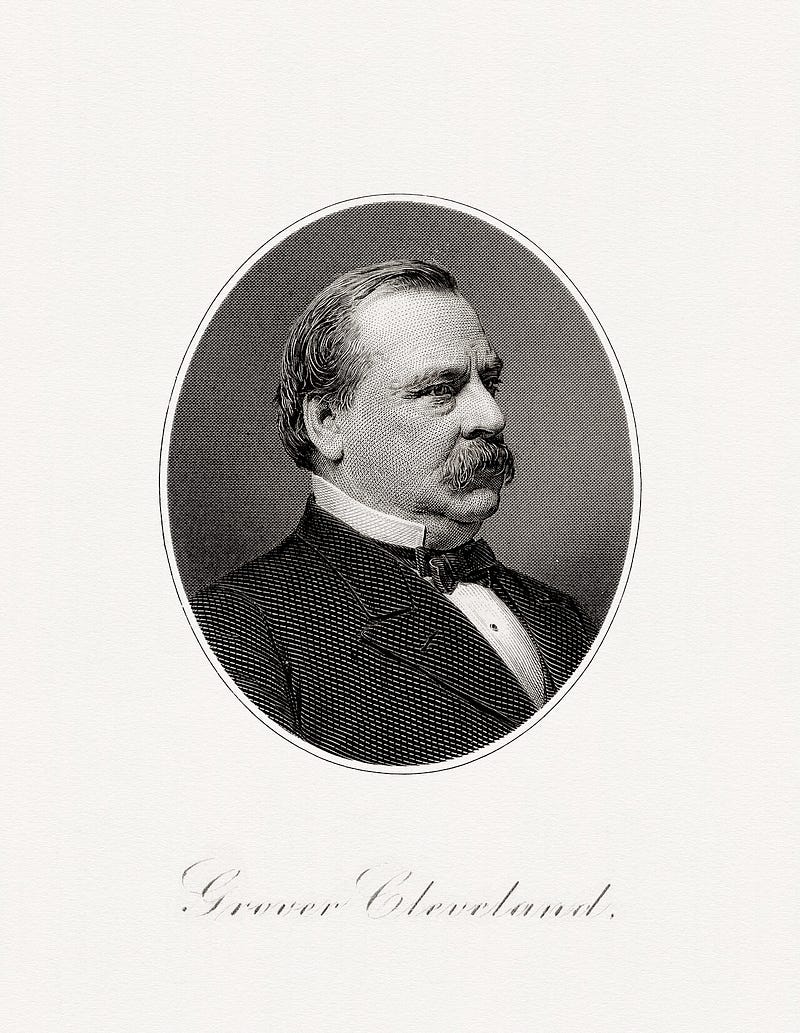
She had not come to plead. She had come to negotiate, and her argument was simple and pointed: the federal government was using her husband’s death to destroy a university built for the children of California — a university that charged no tuition, admitted women on equal terms with men, and taught practical arts beside classical ones, engineering next to philosophy, agriculture next to literature.
Cleveland listened. A reformer who had made his name opposing Gilded Age excess, he was also a pragmatist who could see that a university was not a railroad and that destroying it would enrich no one. He would not drop the government’s claim outright — he could not — but he signaled that his administration would not oppose a reasonable settlement, and that signal gave Jane the political cover she needed.
A Three-Front Legal War
From there Jane fought on three fronts at once.
The first was the Supreme Court. The estate case crawled through the federal courts for two years until, in 1896, the justices ruled in United States v. Stanford. The decision was narrow but decisive: the government’s claim was sharply reduced, and the assets could finally be unfrozen.
The second was the founding grant itself. A young Stanford Law graduate — one of the university’s own — had found a fatal flaw in the founding documents; the original grant to the trustees was legally defective, and a serious challenge might have unraveled the whole institution. Jane hired him to rewrite the grant from scratch, closing every loophole and hardening the university’s legal foundation against anything that might come later.
The third was the California legislature, and here Jane saw what the lawyers had missed. The gravest long-term threat was neither the federal government nor the probate court but California tax law, since a private endowment could be bled dry over time by property taxes. She lobbied the legislature to create a permanent tax exemption for educational institutions. The bill passed, and it remains California law today. Three fronts, three wins — all of them carried by a woman who had never attended college herself.
Giving It All Away
By 1898, probate was resolved, and Jane finally had the fortune within reach. She wasted no time giving it away.
She sold the jewelry of a Gilded Age marriage — sapphires and emeralds gathered over decades — and gave the proceeds to the university. She liquidated her art collection and sold her last property in San Francisco. In 1901, she transferred more than $30 million of her personal fortune, essentially everything she owned, to the trustees; adjusted for inflation, that single gift is worth well over $1 billion today, and at the time it was the largest philanthropic gift in American history. The one thing she kept was the cottage on the Palo Alto farm.
When Jane Stanford died in Honolulu on February 28, 1905 — under mysterious circumstances that prompted a murder investigation still unsolved today — her estate was valued at $7 million. She left $4 million of it to the university and the rest to hospitals, orphanages, and other charities. Her total gifts to Stanford came to more than $40 million, over $1.2 billion in today’s terms, from a woman who twelve years earlier had been living on $350 a year.
What Money Cannot Measure?
The dollar figures are staggering, but they are not the reason the story matters.
Jane Stanford did not have to do any of it. She could have accepted the trustees’ recommendation, closed the university, and lived out her years comfortably on that $10,000 annuity, traveling Europe and hosting salons, and no one would have blamed her. She was sixty-five, she had buried her only child, and then her husband, and the world fully expected her to retire into graceful grief. Instead she chose poverty, eleven years of legal combat, and repeated journeys to Washington to sit across the table from men who patronized and underestimated her — and she beat them every time.
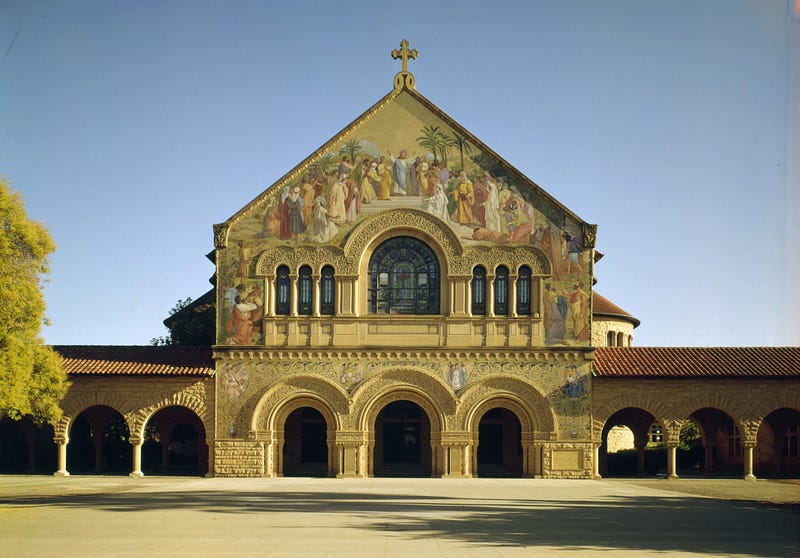
Without her refusal, there is no Stanford University. The sandstone quad would be a footnote, the palm-lined Oval a ranch, and there would be no Frederick Terman nurturing Bill Hewlett and Dave Packard in a Palo Alto garage, no Silicon Valley, no Google, no HP, no generation of engineers who reshaped the world. All of it traces back to one decision in June 1893, when a widow in a dark dress stood before a room of men and was told the rational thing to do was to quit.
“No.”
One word, and the best investment anyone ever made.
Coming next in this series: Post 3 — “The Professor Who Invented Silicon Valley.” How Frederick Terman turned a second-tier university into the world’s innovation engine.
Support writers. All our non-profit’s offerings here.
Click here to subscribe to the IT Chronicles newsletter.
Click for Wordsmith, Mystery Writing, Write Like Stephen King, more
By the EIC Susan Brearley with Ideogram