The Professor Who Invented Silicon Valley
Frederick Terman Didn't Found a Company or Make a Fortune - He Built the System that Made both Inevitable
IT HISTORY
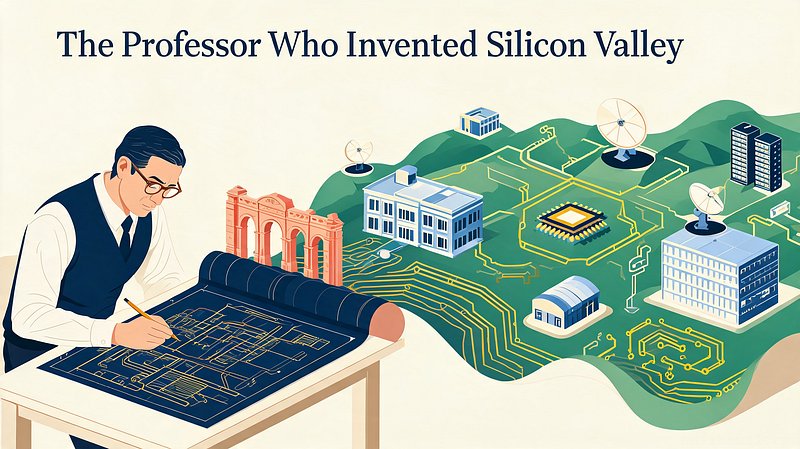
The Professor Who Invented Silicon Valley
Frederick Terman Didn’t Found a Company or Make a Fortune — He Built the System that Made both Inevitable
Silicon Valley has a brain, and it sits on an old horse farm in Palo Alto. For more than a century, the people, patents, and companies that run the tech industry — Google, Cisco, Sun, Yahoo, LinkedIn, Instagram, and tens of thousands more — have come out of Stanford University. This is the story of how that brain got built, in five parts.
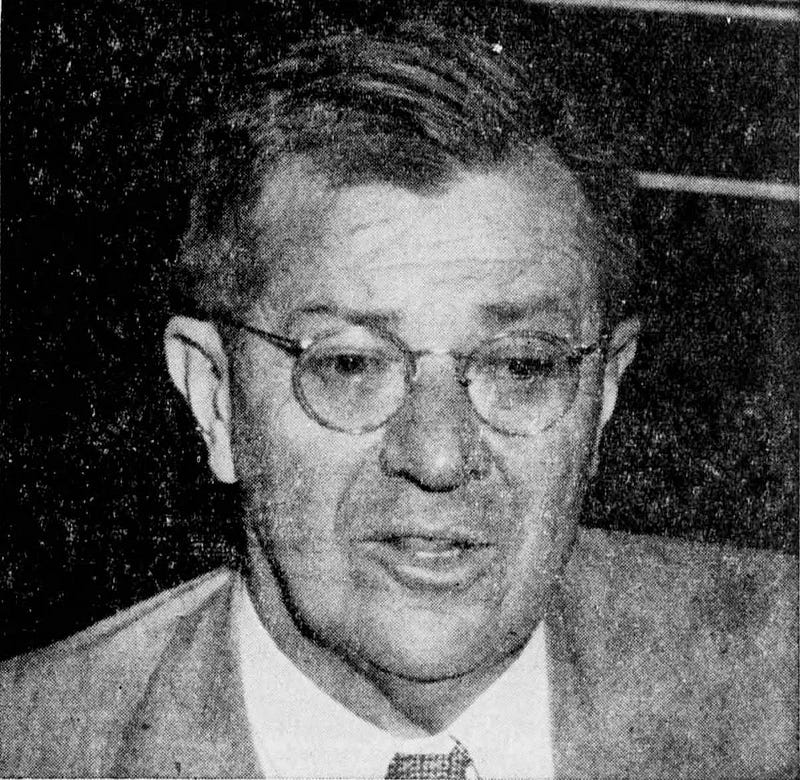
Rain was falling when Frederick Terman stepped off the train at Palo Alto station in December 1945. Japan had surrendered three months earlier, the war was over, and Terman was coming home.
He had spent three years directing the Harvard Radio Research Laboratory, an 850-person operation building the radar countermeasures that jammed Nazi air defenses and saved thousands of bomber crews. Vannevar Bush had recruited him personally, on one condition — that he leave Stanford behind. Now he was walking back into a university the war had passed by almost entirely.
Fifty Thousand Dollars
One number haunted Terman for the rest of his life: $50,000. That was the total military research funding Stanford had received across the entire Second World War — not per month, not per project, but from Pearl Harbor to V-J Day.
MIT, over the same years, took in $115 million. Its Radiation Laboratory burned through roughly $2 billion in today’s dollars, employed 4,000 people, produced 150 radar systems, and welded the American university permanently to the American military. Even Terman’s own Harvard Radio Lab, a $4.5 million operation, was ninety times the size of Stanford’s whole war-research footprint. Stanford, by comparison, had turned out a handful of training manuals.
Terman had left in 1942 on a handshake and returned to a campus that was quiet, provincial, and still “the Harvard of the West” in aspiration only — a tiny engineering school with no government contracts, no industrial partners, and no national reputation. The humiliation stung, but instead of brooding, he did arithmetic. At Harvard he had watched war fuse science, money, and government into a single engine, and he understood what nobody else at Stanford seemed to: the wartime funding spigot was not closing, only looking for a new address. He meant to build it one.
Raiding Harvard
No dean has ever hired the way Frederick Terman hired.
Starting in 1946, he skipped the search committees and the stacks of CVs and simply picked up the telephone, calling the men he had worked with at Harvard — engineers who had built the radar systems that won the war and understood microwave electronics, klystrons, traveling-wave tubes, the whole new physics of high-frequency engineering. He made eleven offers and got eleven acceptances.
These were people who had run divisions at the Radio Research Lab and designed countermeasure systems under combat deadlines, the kind who could turn physics into hardware in weeks. In almost any other era they would have become professors at MIT. Terman brought them all to Palo Alto, and by 1950 Stanford’s electronics program had leapfrogged far older departments: graduate enrollment tripled, government contracts began to flow, and visiting scientists went back east describing “the MIT of the West Coast.” The phrase was not entirely a compliment, and Terman did not care about the tone.
Steeples of Excellence
In 1947, Terman set down the doctrine that would define his career:
“It is better to have one athlete who can jump seven feet than a whole squad of athletes who can all jump six feet.”
He called it “steeples of excellence” — find a handful of fields where Stanford could be the best in the world, pour everything into them, and let the rest go. Where most deans spread money evenly, Terman concentrated it. Looking at Stanford’s open land and its proximity to the electronics firms sprouting around the Bay, he bet on electronics, communications, and the solid-state physics that was just being born at Bell Labs, then hired for it, fought for lab space, cultivated relationships with military funders, and waited.
Wired for the Cold War
In June 1950, North Korean tanks crossed the 38th parallel, the Korean War detonated American defense spending, and Terman was ready.
The Applied Electronics Laboratory opened in 1951 on a cascade of contracts he had been cultivating since 1946, and its work with the NSA, CIA, Navy, and Air Force ran deep — much of it secret. What is on the record is that the AEL developed electronic-intelligence systems, radar technologies, and communications equipment that defined the American technological edge through the 1950s, and that it trained engineers in signals intelligence, microwave systems, and solid-state electronics, the very disciplines that would power the semiconductor industry. By 1955 Stanford had stopped chasing MIT and started building something different.
Rewriting the Rules
What Terman did next broke nearly every norm of American higher education, because he changed what a university was for.
He began pushing graduate students to start companies rather than finish PhDs. In the 1950s, that was heresy — a student who left before the dissertation was a failure — but Terman built his department around the opposite idea, that founding a company was a legitimate, maybe even the highest, form of academic output. When Bill Hewlett and David Packard had started their own company in a Palo Alto garage back in 1939, it was Terman who arranged their first loan.
He also urged his professors to consult. Most universities tolerated outside consulting grudgingly; Terman treated it as essential, wanting faculty in companies to absorb industry’s problems, carry them back to the lab, train students to solve them, and send those students out again. The membrane between university and market, in his design, had to be as thin as possible — and in the dense cluster he was assembling, a discovery could reach the company that would build it by Monday afternoon rather than after years of publication, patenting, and licensing. No other American university worked this way, and most still don’t.
580 Acres
In 1951, Terman made the move that stuck.
Stanford owned more than 8,000 acres by grant from the founding family, but the charter forbade selling any of it. Terman’s workaround was the long-term lease: rent the land to technology companies and build a physical ecosystem where research and industry shared the same ground.
The Stanford Industrial Park opened on 580 acres, and its first tenant was Variant Associates, founded by Stanford-affiliated researchers who had developed the klystron tube under Terman's guidance. Seven companies had joined by 1955, seventy by 1970, and ninety by 1980, together employing 25,000 people. Hewlett-Packard put its headquarters there, and Eastman Kodak, General Electric, and Lockheed all built major facilities on Stanford land.
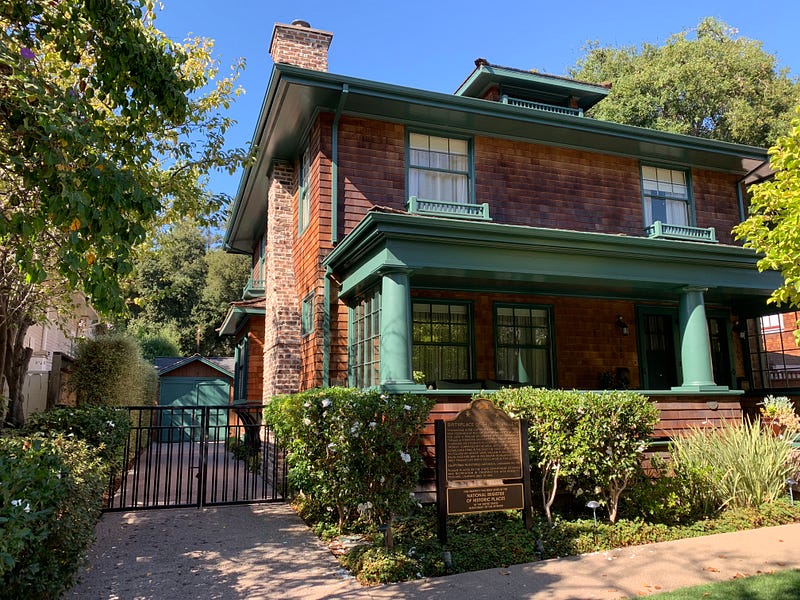
The park was policy, not accident: Terman had grasped a thing obvious only in hindsight, that when engineers from rival firms eat in the same cafeteria, ideas travel faster than any journal can carry them.
From Hsinchu to Shenzhen
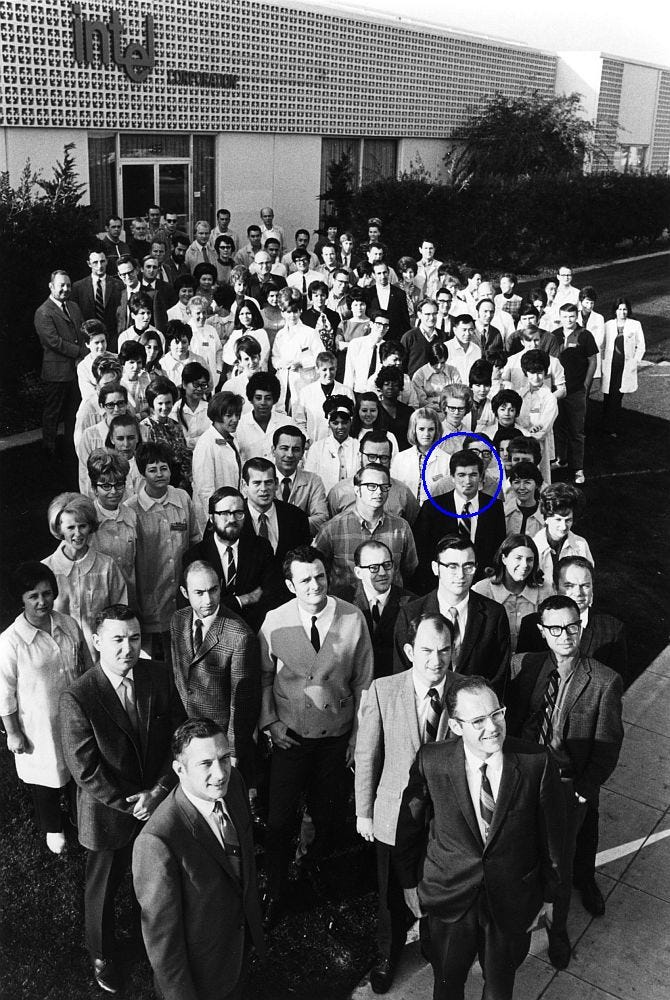
Terman’s blueprint did not stop at the county line. Back in 1941, he had served as president of the Institute of Radio Engineers, a rare distinction then for a West Coast engineer, and in 1976 President Ford awarded him the National Medal of Science.
The deepest evidence of his influence, though, came from overseas. Taiwan invited him to consult on a technology park in Hsinchu during the 1970s, and that park became home to TSMC, which today manufactures most of the world’s advanced chips. South Korea commissioned the “Terman Report,” a blueprint that helped shape the chaebol-driven electronics industry, with Samsung and SK Hynix at its core. The model kept scaling — Singapore, Bangalore, Shenzhen — until research parks everywhere could trace their lineage back to 580 acres of California grassland. The tight coupling of university science, venture capital, and startup culture the world now calls Silicon Valley was not something that simply emerged. An electrical engineering professor who believed institutions could be designed as circuits engineered it on purpose.
Packard’s Eulogy
David Packard spoke at Terman’s memorial service in December 1982. By then, he was a titan in his own right — a billionaire, a former Deputy Secretary of Defense, and a co-founder of the company Terman had helped bring into the world.
Before the mourners, he said the line that has become Palo Alto scripture:
“Silicon Valley flourished because of his students. That was no accident. It was the result of a carefully crafted plan.”
Terman never invented a product, founded a company, or made a fortune; he spent his whole career on Stanford’s payroll. What he built instead was the system that produced the products, the companies, and the fortunes. He didn’t start a firm — he started the thing that starts firms.
Silicon Valley has many fathers. Shockley brought the transistor, the Traitorous Eight brought the startup, the venture capitalists brought the money. Only one man brought the blueprint and then spent thirty years building it out, lease by lease and hire by hire, on a patch of farmland nobody outside the Bay Area had ever heard of.
Coming next in this series: Post 4 — “The Garage, the Professor, and the Birth of HP.” How Terman’s faith in two students created the company that defined the Silicon Valley model.
Support writers. All our non-profit’s offerings here.
Click here to subscribe to the IT Chronicles newsletter.
Click for Wordsmith, Mystery Writing, Write Like Stephen King, more
By the EIC Susan Brearley with Ideogram