The Moth Didn’t Invent the Word ‘Bug’
The Moth Didn’t Invent the Word ‘Bug’. IT HISTORY The Moth Didn’t Invent the Word ‘Bug’ On September 9, 1947, at Harvard, the Mark II relay computer broke。
IT HISTORY
The Moth Didn’t Invent the Word ‘Bug’
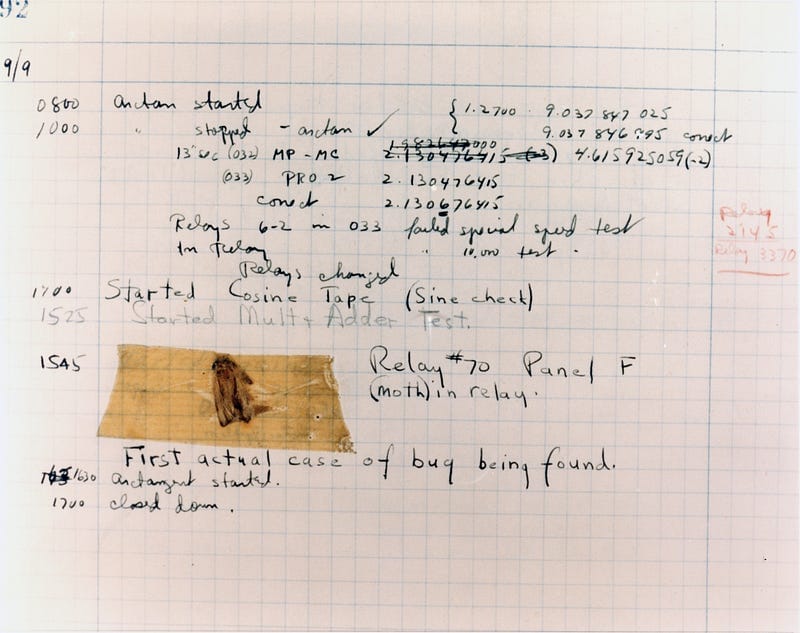
On September 9, 1947, at Harvard, the Mark II relay computer broke down. A technician opened the panel, pulled a dead moth out of relay #70, taped it into the operations log, and wrote a line next to it:
“First actual case of bug being found.”
That sentence became the origin story computer science tells itself: Grace Hopper found the first bug, and coined the word “debug” along with it. It’s in textbooks. It’s on programmer T-shirts.
But the word worth reading closely is actual. Calling it the first actual bug already gives the game away — “bug” was already a working term by then, common enough that it needed no explanation. This wasn’t a naming ceremony. It was a pun.
A Joke Told at the Expense of a Seventy-Year-Old Word
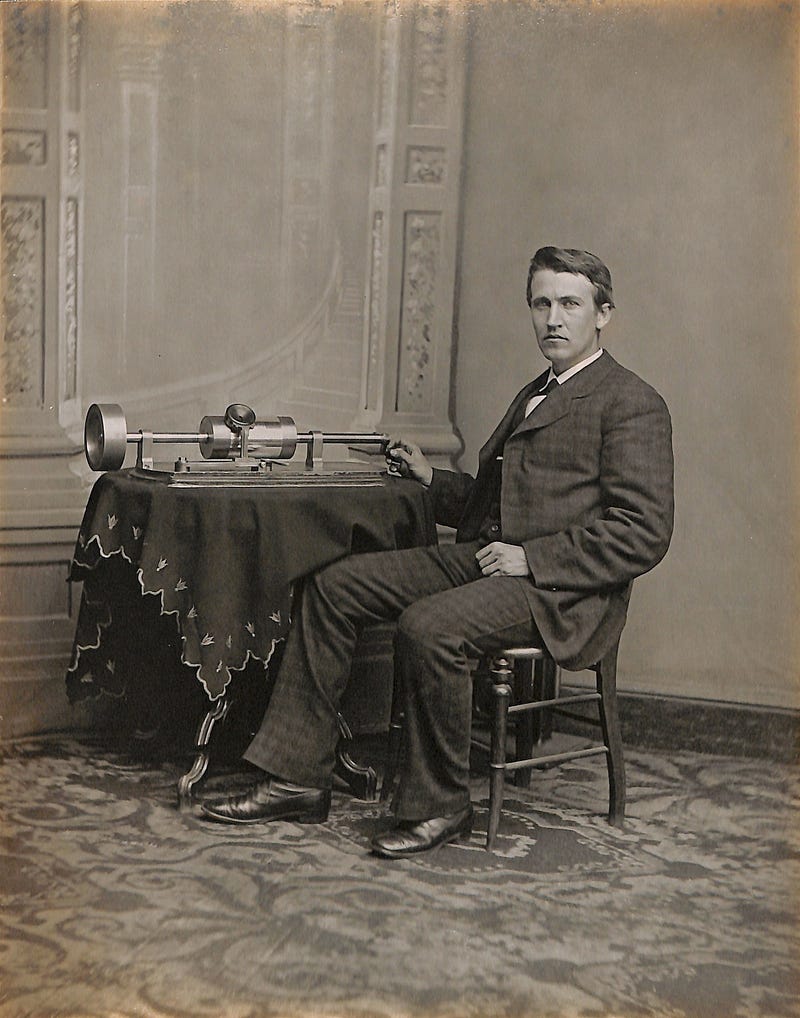
Thomas Edison wrote to William Orton, president of Western Union, in March 1878:
“You were partly correct; I did find a ‘bug’ in my apparatus.”
The letter is often misattributed to a recipient named Puskás. The original in the Rutgers Edison Papers names Orton and is dated March 13. Later that year, Edison used the plural form in another letter, treating “bugs” as shorthand that needed no explanation to the reader.
From there, the word kept traveling. Webster’s New International Dictionary listed it as a “defect in an apparatus” in 1934. Life magazine used it for wartime equipment failures in 1942. Isaac Asimov’s short story “Catch That Rabbit” used the same word for a malfunctioning robot in 1944. By 1945, the Journal of the Royal Aeronautical Society was using “debug” as a standard verb.
By the time that moth got pulled out of a relay in 1947, “bug” had been alive in engineers’ mouths for close to seventy years.
Repetition Is the Real Culprit, Not Hopper
The logbook itself carries no signature. Nobody recorded who taped in the moth or wrote the line. The Smithsonian’s own position is that this particular logbook may not even have belonged to Hopper. The Computer History Museum’s phrasing is careful too: she “was present and made the incident famous later on in her many public lectures.” Neither institution credits her with finding it. The Computer History Museum and IEEE Annals of the History of Computing (2000, Vol. 22) point the handwriting toward a different name instead — operator William “Bill” Burke, with the moth lodged at relay #70, panel F.

Hopper went on to become a rear admiral in the Navy; both FLOW-MATIC and the early groundwork for COBOL trace back to her. That record is exactly why “she coined a word” sounded plausible to everyone who heard it. What she actually did was tell this story for decades, and tell it better than the archive ever could.
Nobody lied. Nobody rewrote history. A story told sincerely for 45 years grows into “fact” on its own, and that isn’t something to pin on any one person.
The moth was real. So was the logbook entry. What’s been overlooked for almost eighty years is a single word.