The 1968 Demo That We Spent Fifty Years Catching Up To
One man demoed the mouse, hypertext, and the video call in a single afternoon in 1968 — the world took fifty years to make them ordinary
IT HISTORY
The 1968 Demo That We Spent Fifty Years Catching Up To
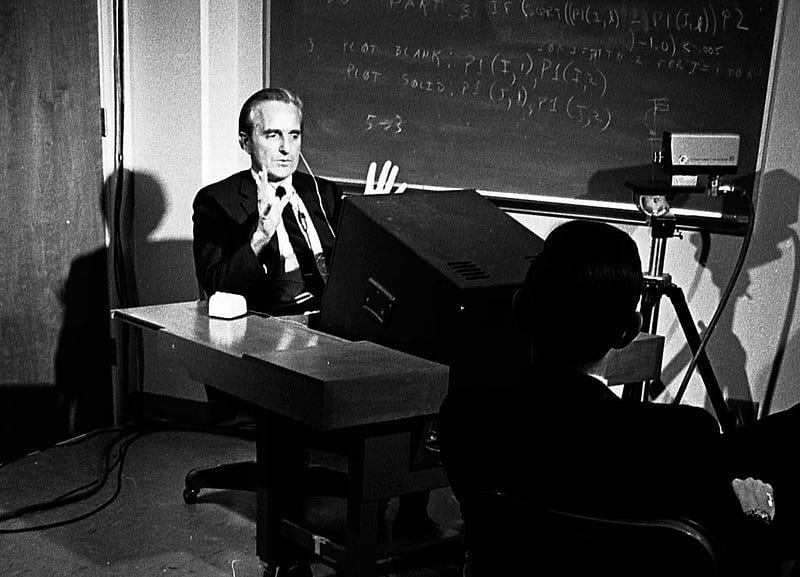
It’s December 9, 1968. A man sits at a console on a stage in San Francisco, a headset hooked over one ear. He looks less like a scientist than a fighter pilot.
Over the next ninety minutes, he will show roughly everything you did on a screen today.
A little over a thousand engineers are in the room, waiting for what the program promises will be a technical talk. They have no idea they are about to watch the future arrive about fifty years early.
His name is Douglas Engelbart. And many of his peers think he is a crank.
What a Computer Was in 1968
A computer in 1968 was not something on your desk. It was a thing in a room you were not allowed to enter.
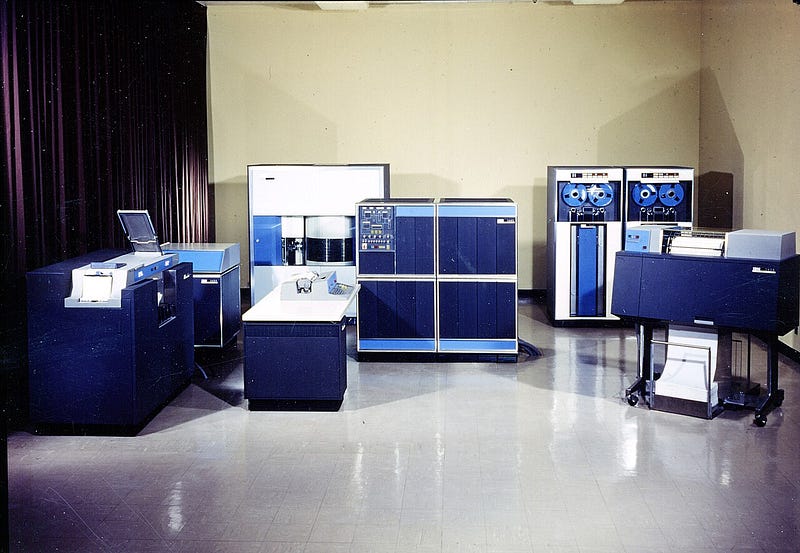
You wrote your problem onto punch cards. You handed the cards to an operator. Hours later, sometimes days, you got back a printout.
Nobody found this strange. A computer was used for trajectories and warhead yields. It was a calculating engine. It was not for people.
Engelbart wanted something almost no one else wanted. He thought the most valuable thing a computer could do was not replace human work but amplify human thinking: reading, writing, arguing, working together.
In 1962, he wrote it down, in a report with a blunt title: Augmenting Human Intellect.
The reaction from the field was mostly a shrug and sometimes a sneer. Letting a person interact with a machine in real time was a waste, the argument went. Machine time was precious. Human time was not.
Hold onto that sentence. It ages badly.
Ninety Minutes
He opens a system called NLS. What follows, one piece at a time, is the world you live in. The full reel still exists, and you can watch it here.
I’ll take them one at a time. For each, the same two facts: what he showed that day, and how long it then took to reach you.
The mouse. A block of wood with two metal wheels underneath, sliding a cursor around the screen. The first public sighting of the device. The patent wouldn’t issue until 1970.
It reached ordinary homes with the 1984 Macintosh. About sixteen years.
Windows and a graphical screen. Different views, carved into regions, navigated by pointing rather than by punch cards. → The Mac and Windows carried that to the rest of the planet over the next decade and a half.
Live text editing. Typing, inserting, deleting, copying, moving — on screen, instantly. → This is the ancestor of every word processor you’ve used. Much of the audience had never seen text change on a screen before.
Hypertext. Click a link, jump between documents. → In 1989, Tim Berners-Lee built the Web on the same idea. About twenty years.
Real-time collaboration. Engelbart was in San Francisco. A teammate was thirty miles away in Menlo Park. They shared one screen and edited one document together. → That became normal life with Google Docs in 2006, then a pandemic that pushed entire companies online. Almost forty years.
The video call. In the corner of that shared screen sat the live face of the colleague thirty miles away, talking while they worked. → Zoom became a fixture of working life only in the last few years. About fifty years.
A word about the rig behind all this. To stitch a picture and a signal from thirty miles out onto the screen above the stage, the team ran four cameras, leased a microwave link, soldered their own modems, and rented phone lines. The man working the camera in Menlo Park was Stewart Brand — editor of the Whole Earth Catalog, not a computer person at all. ARPA paid for the whole thing.
In the audience sat a young man from the University of Utah named Alan Kay, who would later invent Smalltalk and object-oriented programming. Years on, he described that afternoon:
His talks were not for information, but to show a promised land… his demos with the projector reminded me of Moses, as played by Charlton Heston, parting the Red Sea in The Ten Commandments.
The lights came up. Engelbart stood. A thousand computer scientists rose and applauded.
By today’s standards, the demo is grainy and slow. But drop yourself back into 1968 — a year when a display screen was still a rare object — and every minute of it is a road being lit in the dark, decades ahead of time.
How the Seed Grew
It did not turn into a fairy tale.
Through the 1970s, Engelbart’s lab thinned out. His people drifted away, and many of them landed at Xerox PARC — the next holy site.
In 1973, PARC built the Alto: a personal computer, smaller and cleaner than NLS, with the demo's ideas inside it.
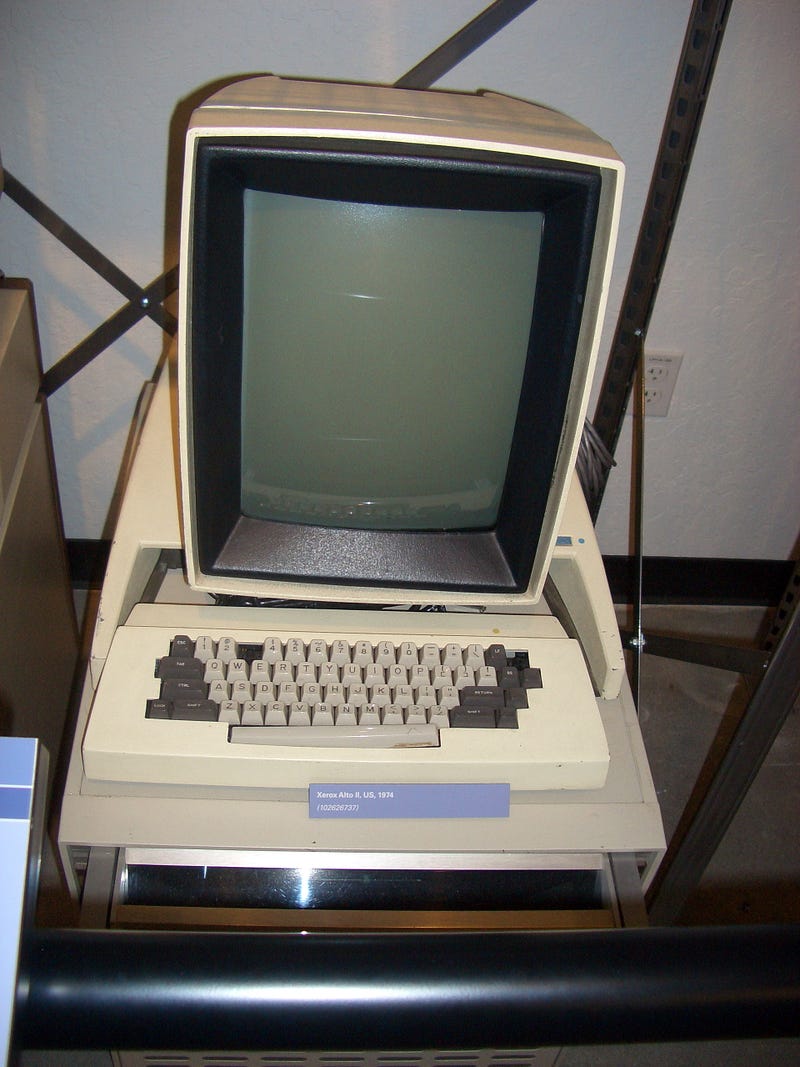
The Alto drew in two young visitors. One was named Jobs. One was named Gates.
You know the rest. Macintosh, Windows, the internet, one after another. A seed planted in 1968, growing along a line that ran NLS → Alto → Mac and Windows → the web, until it reached the present.
Now
Right now, you’re holding a mouse or sliding a finger across a screen.
A few windows are probably open. A document you’re editing. A link you just opened. Maybe a video call running in a corner.
Engelbart died in 2013.
We’ve been living inside the afternoon he demonstrated in 1968. It just took us fifty years to catch up to it, one piece at a time.
References
- 1968 Demo Highlights (full reel) — YouTube playlist
- The Mother of All Demos — Wikipedia
- Firsts: The 1968 Demo — Doug Engelbart Institute
- Augmenting Human Intellect: A Conceptual Framework (1962)
Support writers. All our non-profit’s offerings here.
Click here to subscribe to the IT Chronicles newsletter.
Click for Wordsmith, Mystery Writing, Write Like Stephen King, more
By the EIC Susan Brearley with Ideogram