Silicon Valley’s Most Brilliant Failure
Sun Microsystems optimized for the elegance of the solution instead of the ruthlessness of the business model.

IT HISTORY
Silicon Valley’s Most Brilliant Failure
There is a building on the Oracle campus in Redwood Shores, California. It used to belong to someone else.
Walk past it today, and you’d never know: Java was written here. So was NFS — the networking protocol still quietly running file servers in half the world’s data centers. The company that built both hit a $200 billion market cap, employed engineers who would go on to found Nvidia and invent Gmail, and then — inside a decade — ceased to exist.
This is the story of Sun Microsystems.
A Problem Looking for a Solution
To understand what Sun was solving, you have to understand what computing looked like in 1982.
There were two kinds of computers. On one end, the mainframes and minicomputers — machines like DEC’s PDP series, powerful and shared, like a single telephone pole that an entire neighborhood plugs into. On the other end, the personal computer was rising, cheap and individual, but too underpowered for serious technical work.
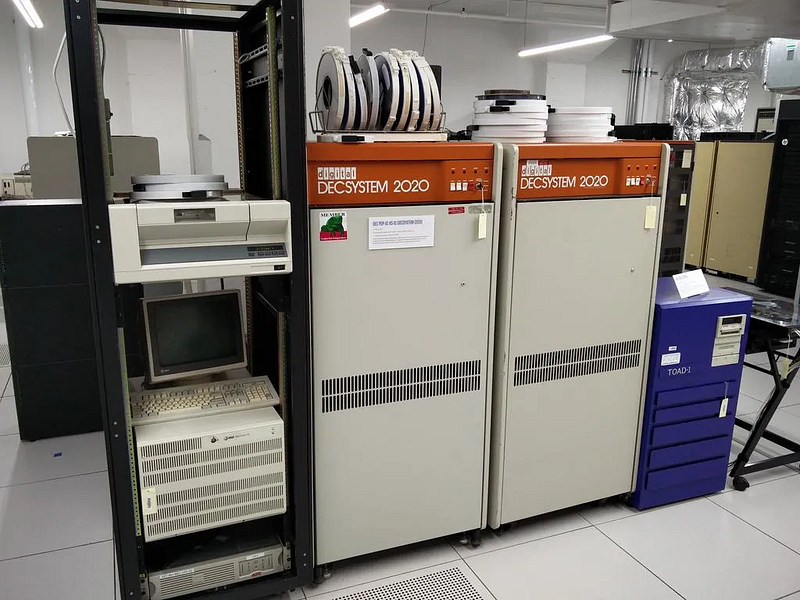
Engineers and scientists were caught in the middle. They needed more than a PC could offer, but they didn’t want to fight over time slots on a shared machine. The field of computer-aided design was exploding — chips, circuits, buildings, airplane parts — all of it increasingly designed on screens. And none of the existing hardware was quite right.
The opportunity was obvious, in retrospect. At the time, almost nobody saw it.
One person who did was Andy Bechtolsheim, a Stanford grad student who had built a prototype workstation in his campus lab, partly inspired by the Xerox Alto. He called it the Sun workstation. It ran a Motorola 68000 processor and hit what he called the “3M” benchmark: one million instructions per second, one megabyte of memory, and a one-megapixel display.
Stanford wasn’t interested in commercializing it. Bechtolsheim shopped the design to manufacturers. No takers.
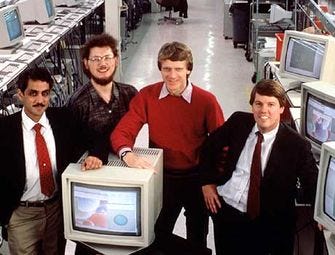
Vinod Khosla had tried to build an EDA software company once before and knew the pain firsthand: great software, no hardware capable of running it well. He looked at Bechtolsheim’s machine and saw a business. He recruited a Stanford Business School classmate, Scott McNealy, to run operations. Then they called Bill Joy.

Joy was already legendary. He had rewritten Unix from the ground up at Berkeley, producing BSD, the operating system that underpinned much of the academic internet. He wrote vi. He helped wire TCP/IP into the kernel before most people had heard of TCP/IP. By any measure, he was a heavyweight.
They incorporated Sun Microsystems in February 1982. Sun stood for Stanford University Network—though the company would quickly outgrow that association.
They were twenty-six years old on average. They had $250,000 in venture funding. They had no product.
Within a year, they had revenue.
The Machine for People Who Needed Real Power
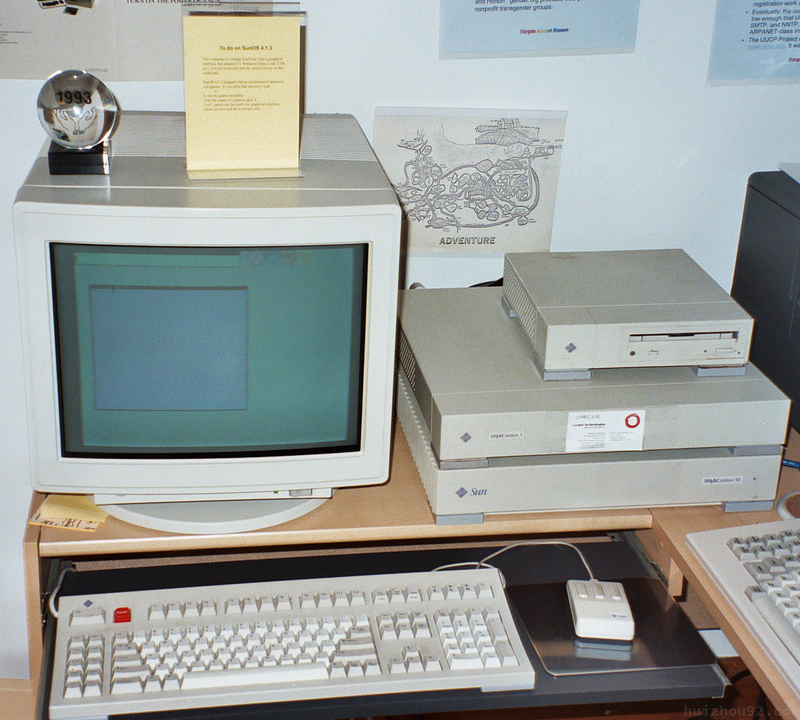
A Sun SPARCstation — the workstation that put serious computing power on a single engineer’s desk, at a price that didn’t require a corporate budget committee.
Sun’s workstations were not revolutionary in the way the Macintosh was revolutionary. There were no flashy demos, no “one more thing” moments, no attempt to change how ordinary people interacted with computers. Sun was building for the engineer, the researcher, the scientist — anyone who needed serious computing power all to themselves.
Commodity components, open standards, priced below the competition, and running Joy’s software.
Joy ported BSD Unix to the Sun hardware and kept extending it. He designed NFS, the Network File System, so engineers across a building or campus could share files as if they were stored locally. This was 1984. The concept barely existed, and Sun was the one building it.
The workstations flew off the shelves. Each year, the revenue roughly doubled, then doubled again: $8.5M, $39M, $115M, $210M, $450M, $1B. Five years. Sun was becoming something serious
Growth created its own problems. Motorola, supplying Sun’s processors, couldn’t keep up with demand or with bug fixes. Intel’s chips were catching up in raw speed but still fell short for Sun’s needs. The solution, proposed by Joy and the engineering team, was to design their own processor.
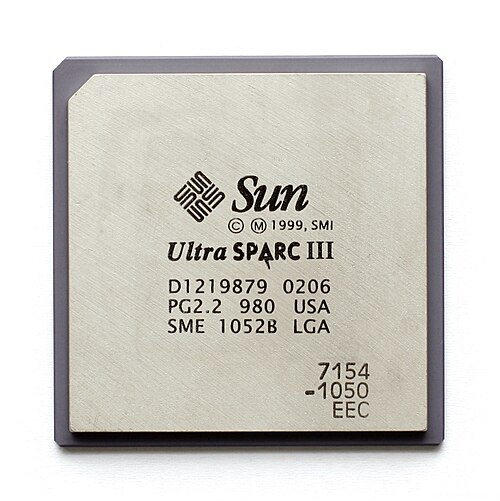
SPARC launched in 1987, built on RISC — Reduced Instruction Set Computing — a design philosophy: fewer instructions, executed fast. SPARC outperformed the CISC (Complex Instruction Set) chips that powered most of the competition. And, crucially, Sun made the architecture open, licensing it to other manufacturers and building an ecosystem around it.
Paired with Solaris — the commercial evolution of Joy’s BSD work — Sun had built something extraordinary: a complete, vertically integrated platform from the chip to the kernel to the network stack, all under one roof, all optimized to work together.
You could bolt fifty SPARC processors together into a single Solaris machine. Windows, at the time, topped out at four or eight Intel processors. For the enterprises running financial risk models or scientific simulations, the comparison wasn’t even close.
Internet Comes to Sun
Then the 1990s arrived, and everything accelerated.
The World Wide Web changed what a server was for. Suddenly, every startup that could scrounge together funding needed racks of them, and when people walked into data centers in 1997 or 1998 to figure out what to buy, they kept buying Sun.
eBay ran on Sun. Yahoo ran on Sun. Even Microsoft ran parts of its infrastructure on Sun. Sun made the servers, and the servers were the internet.

Walk into any serious data center in the late 1990s, and this is what you’d see: rack after rack of Sun servers, humming under the weight of the early internet.
In 1995, a team led by James Gosling quietly finished a project they had been working on for years inside Sun. They called it Java.
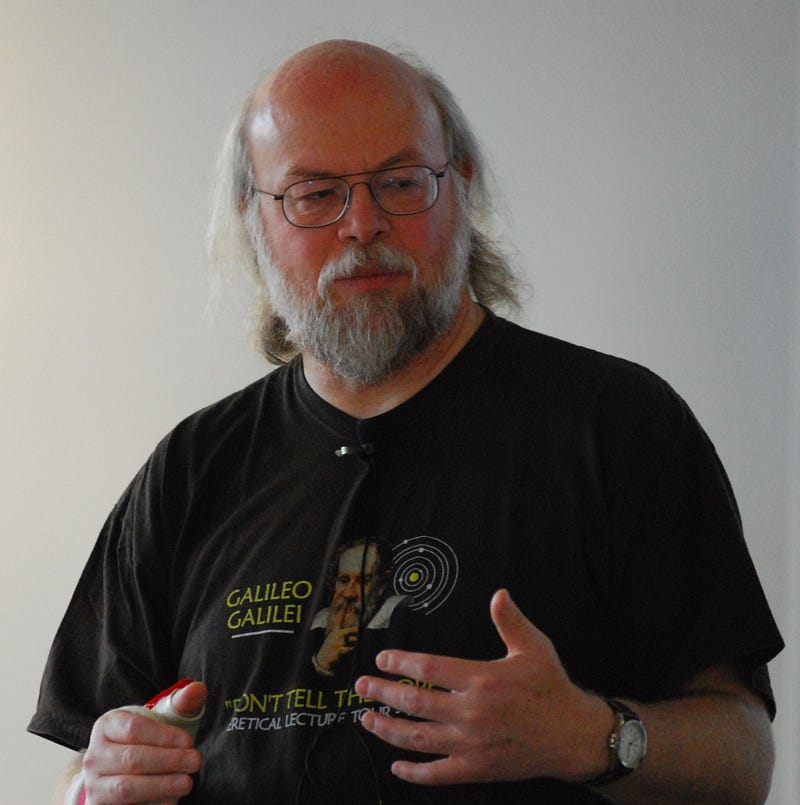
Originally, the project was targeting set-top boxes and embedded devices. By the time Java shipped, the web existed, and the team realized something bigger: here was a language that could run anywhere. Write once, run anywhere. Platform independence, finally delivered.
IBM adopted Java. Oracle adopted Java. HP, BEA, and the entire enterprise software ecosystem rushed in. Sun proposed J2EE — Java 2 Enterprise Edition — as a framework for internet-scale business applications, and the market more or less agreed.
For a moment, it looked like Sun would not just power the internet — it would program it.
By 2000, the market cap had crossed $200 billion. Everything Sun had built seemed to be converging at once.
The Floor Drops Out
The dot-com crash didn’t arrive without warning. It arrived anyway.
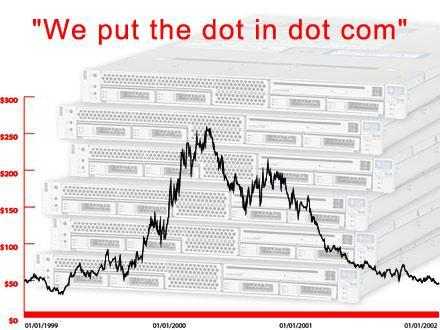
When internet companies collapsed, they stopped buying servers. When they collapsed fast, they liquidated their existing servers at pennies on the dollar, flooding the secondary market. Sun’s hardware, which had been selling itself, suddenly had to compete with itself at a fraction of the price.
Revenue cratered. Tens of thousands were laid off. On paper, it looked survivable: Sun still had Solaris, SPARC, Java on hundreds of millions of devices, and an enterprise installed base that wasn’t going anywhere overnight.
But something had changed while the dot-com party was happening. In Helsinki, in 1991, a student named Linus Torvalds had posted to a newsgroup:
I’m doing a (free) operating system (just a hobby, won’t be big and professional like gnu) for 386(486) AT clones.
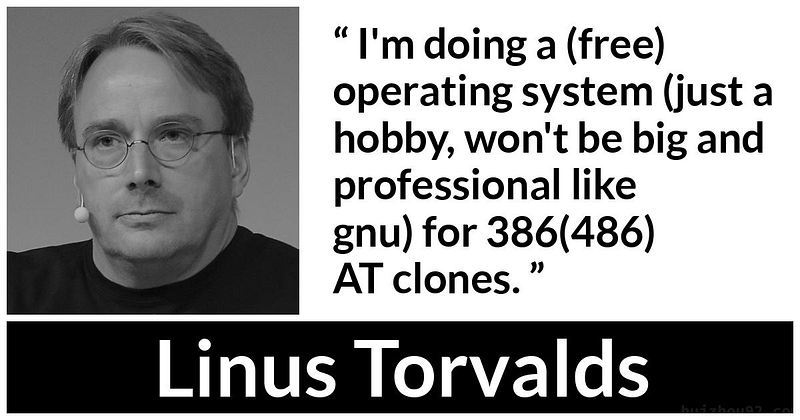
By 2001, that hobby project was production-grade. Linux ran on Intel hardware. Intel hardware was cheap. A cluster of a thousand Linux boxes, wired together, could match a single Sun server at a fraction of the cost. Google was proving it. Every hyperscaler after would prove it again.
IBM made the decision visible to everyone: in 2001, it announced a $1 billion investment in Linux. Not a hedge. A commitment. If IBM were betting on Linux, the conversation would be over.
Cruelly, Sun had helped make this possible. Open standards, TCP/IP in the kernel, the culture of sharing: these were Sun’s values. Bill Joy had built BSD on principles similar to those Torvalds were using. Sun had championed openness when it helped Sun win.
Now, openness was eating Sun alive.
What Went Wrong
Sun’s failure wasn’t the Kodak kind, where leadership misses what’s coming. McNealy saw Linux. He saw commodity x86. He saw what Google was doing with cheap boxes wired together. The problem was that seeing it didn’t help. Sun’s revenue, its sales force, its comp plans, its sense of itself — all of it was wired to selling expensive machines.
He had a famous line: “We’re at war with Windows.” But the war with Windows, the war with Intel, the war with Linux — Sun kept fighting on the wrong battlefields.
Java was Sun’s most visible product. Sun had created the enterprise era’s dominant programming language. IBM, Oracle, and BEA were each making billions on top of it — consulting, application servers, middleware. Sun made almost nothing from any of it.
This wasn’t stupidity. Java had been conceived as a way to sell more Sun hardware. When it became genuinely platform-independent, Sun had no mechanism to capture value from what it had built. The engineering was a success. The business model never caught up.
Sun tried: support contracts, OpenSolaris, OpenJDK, and a $1 billion acquisition of MySQL. The pivots came late. In April 2009, Oracle acquired Sun for $7.4 billion — a company once worth $200 billion. The engineers who had spent their careers there described it the way people describe the end of something beloved: with grief.
What Sun Left Behind
Sun was lost. And yet its fingerprints are everywhere.
Java runs on billions of Android devices. It runs inside virtually every bank and insurance company on earth. It runs in the Minecraft you play and the trading systems that execute your retirement account.
Solaris gave birth to ZFS, a file system so advanced that it’s still being ported to new operating systems decades after Sun’s death. DTrace, a dynamic tracing framework for debugging production systems, was created at Sun and is now embedded in Linux, macOS, and FreeBSD.
NFS is still the backbone of networked storage in enterprise environments. SPARC processors, acquired by Oracle, continue to power mission-critical systems with zero tolerance for downtime.
And the people.
Andy Bechtolsheim became an early investor in Google, writing a check to Larry Page and Sergey Brin before they even had a bank account. Vinod Khosla became one of Silicon Valley’s most influential venture capitalists. Bill Joy joined Kleiner Perkins.
Lars Bak wrote Java’s HotSpot VM, then wrote V8, the JavaScript engine inside Chrome and Node.js. Paul Buchheit invented Gmail.
Joshua Bloch wrote Effective Java, which shaped how a generation of programmers thinks about software design.
Brendan Gregg built most of the performance tooling that Linux engineers still use today.
Chris Malachowsky co-founded Nvidia.
Sun produced talent the way certain universities do — not by hoarding it, but by creating conditions in which serious people could do serious work.
A Company Built for Engineers
Ask anyone who worked at Sun what it was like, and you’ll hear the same thing: it was the best place they ever worked.
The engineering culture was real. Talented people were trusted. Hierarchy mattered less than capability. You could propose a wild idea — a new processor architecture, a platform-independent programming language — and if you could make the case, you’d get the resources to try it. Failure wasn’t punished. Risk was rewarded.
This culture produced extraordinary technology. It also produced a company that optimized for the elegance of the solution rather than the ruthlessness of the business model.
“The network is the computer,” McNealy used to say. It was right. The cloud computing revolution proved it. AWS, GCP, Azure — they’re all essentially Sun’s thesis, executed by other people.
Sun saw the future. It couldn’t figure out how to charge for it.
The Sun Sets
What happened was a company that built the future and watched others profit from it — that pioneered networked computing and got outmaneuvered by a kid in Finland; that invented a universal programming language and let everyone else sell services on top of it; that championed open standards until open standards became the weapon used against it.
It’s easy, in retrospect, to call Sun’s leadership arrogant or shortsighted. The reality is more complicated. The people who built Sun were right about how computing would evolve. They were operating within a company whose identity was forged in hardware at a time when the world was moving toward software, and that gap proved impossible to close.
Companies die. That part is ordinary.
What isn’t ordinary is what they leave behind. The engineers who stayed up debugging SPARC silicon, who argued line by line over Java language specs, who wrote distributed file systems that outlived the logo on their badges — they built things that are still running, inside systems whose current owners mostly don’t know where the code came from.
That’s the part that lingers when you drive past the old campus in Redwood Shores. The buildings now have different names. The work inside is still there.
Some notable people who came out of Sun Microsystems: Andy Bechtolsheim (Google’s first major investor), Vinod Khosla (Khosla Ventures), Bill Joy (KPCB partner), Lars Bak (V8 engine author), Paul Buchheit (Gmail inventor), Joshua Bloch (Effective Java), James Gosling (Java creator), Chris Malachowsky (Nvidia co-founder), Brendan Gregg (Linux performance tools), and many others whose work you use every day without knowing it.
Support writers. All our non-profit’s offerings here.
Click here to subscribe to the IT Chronicles newsletter.
Click for Wordsmith, Mystery Writing, Write Like Stephen King, more
By the EIC Susan Brearley with Ideogram