One Professor Got Half the World to Work For Him — And We Should Thank Him
He hid the world's grunt work inside a game a captcha and a language app and hundreds of millions of people did it without noticing
IT HISTORY
One Professor Got Half the World to Work For Him — And We Should Thank Him
The last time a website asked you to prove you weren’t a robot, you probably didn’t think about it. The squashed letters. The fading street numbers. The grid of squares with the traffic lights. Four seconds, maybe five. Then you forgot it.
Now multiply those few seconds by a few hundred million people, every single day.
That is one of the largest pools of unspent human attention on Earth. For most of the internet’s history, it was thrown away.
This is the story of the computer scientist who looked at all that wasted time and saw a machine. Then he built it three times.
The Professor Who Studies Wasted Time
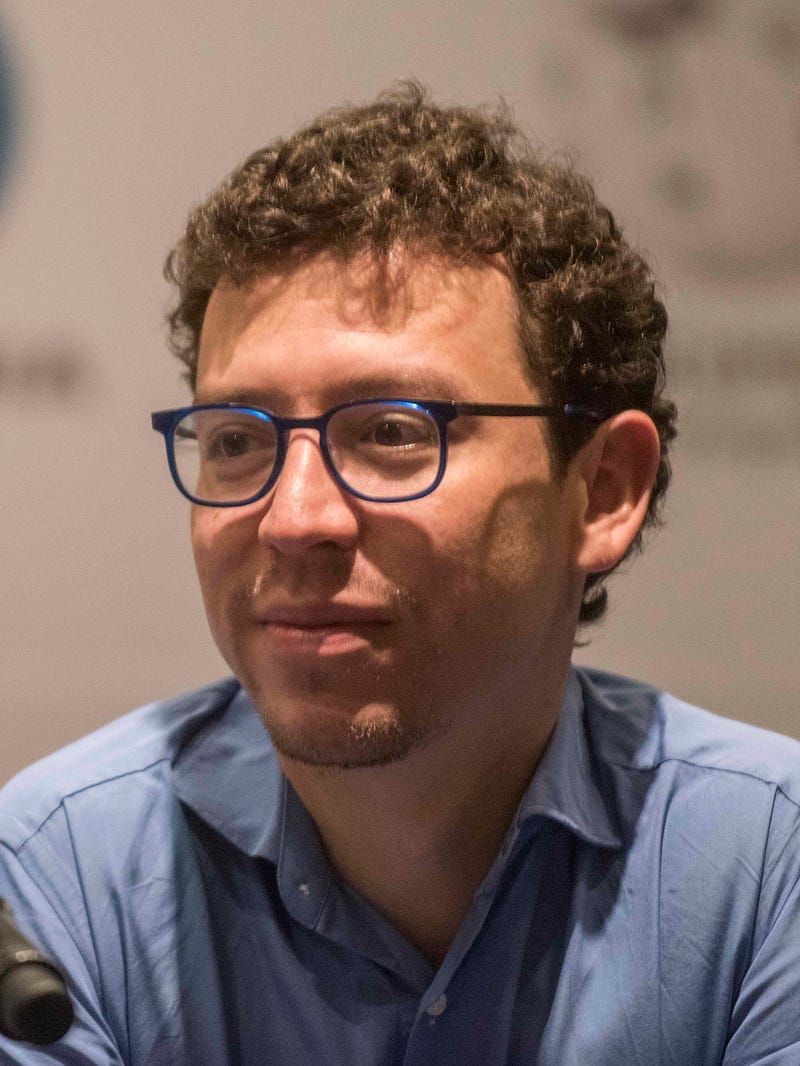
His name is Luis von Ahn. He was born in Guatemala City in 1978, raised by a single mother who worked as a physician, and is now a professor of computer science at Carnegie Mellon.
In 2006, he was given a MacArthur Fellowship, the award people call the genius grant.
He is also, in a specific and admiring sense, the most productive con artist on the internet.
To understand what he does, you have to start with something he helped create and then came to regret.
Around 2000, von Ahn worked with his doctoral adviser, Manuel Blum, on a problem the early web was losing sleep over: bots. Automated scripts were registering for free email accounts by the million and scraping everything in reach. The web needed a way to tell a person from a program.
Their answer was the CAPTCHA, the warped, half-melted word you retype to prove you have a pulse. It worked, and it spread to nearly every login page on the internet.
Then von Ahn did the math.
“If you multiply 10 seconds by 200 million, that turns out to be 500,000 hours every day.”
Two hundred million CAPTCHAs typed daily, ten seconds each. Half a million hours of human thought, every day, spent proving a point to a server and producing nothing else.
Most people would call that a rounding error. Von Ahn called it a resource.
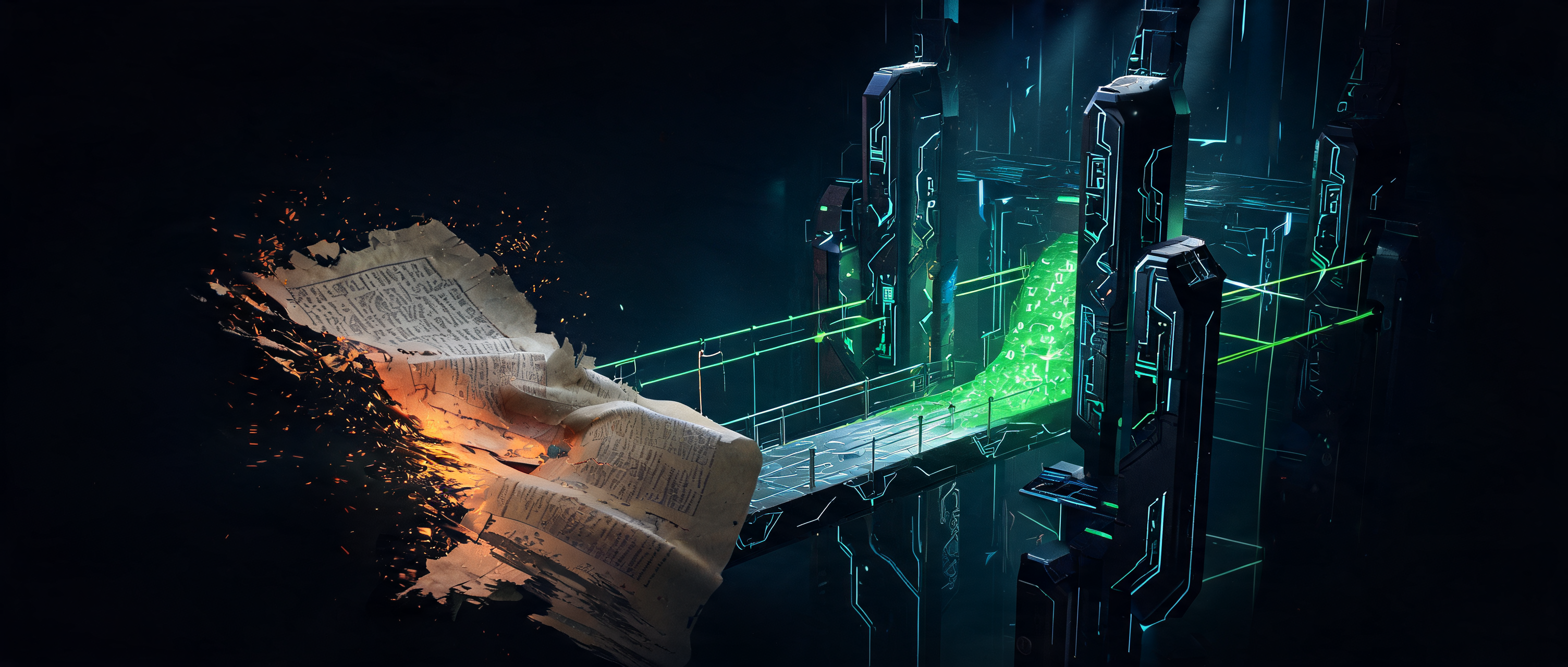
His 2005 PhD thesis gave the idea a name: human computation. The premise is simple and slightly unsettling. Some tasks are trivial for people and nearly impossible for computers — knowing what is in a photo, reading messy handwriting, judging whether a sentence makes sense. So route those tasks to people, in numbers large enough to matter, and let the machine do the rest.
The hard part was never the computing. It was getting the people to show up.
So von Ahn stopped asking them to.
Trick One: A Game That Taught Computers to See
In 2003, computers were effectively blind.
A search engine could find the word “sunset” in a caption, but it could not look at a photograph and know a sunset was in it. The web was filling with images, and almost none of them were labeled in any way a machine could use. The only known fix was to pay people to describe pictures, one at a time, forever. Nobody could afford that.
Von Ahn’s solution was not a labeling tool. It was a game.
The ESP Game, which he launched in 2003, paired you with a stranger. You could not talk to them or see their screen. You were both shown the same image, and the goal was to type a word you thought the other person would also type. When your words matched, you scored, and the round moved on. Two and a half minutes, fifteen images.
It was genuinely fun. People played it for hours.
Here is what those people did not quite notice. A word that two strangers, working blind, independently choose for an image is, almost by definition, a good description of that image. Every match was a free, verified piece of training data. The players thought they were reading each other’s minds. They were annotating the internet.
It worked at a scale that made the old plan look quaint. Between 2003 and 2008, the ESP Game collected about 36 million labels. Von Ahn’s team estimated that if the game were merely as popular as the popular online games of the day, every image on the web could be labeled in a matter of weeks.
In 2006, Google licensed the idea and ran it as Google Image Labeler.
A generation of image search quietly got better, and the people who made it better believed they had just been playing a game.
Trick Two: The Two Words That Digitized the Library
By 2007, von Ahn came back to his own invention — the one burning half a million human hours a day.
A CAPTCHA was a tollbooth. You stopped, you did a tiny task, you moved on, and the task itself produced nothing. He wanted the toll to be used to build something.
At the same time, a separate project was stuck. Libraries and companies were scanning millions of old books and newspapers, trying to turn brittle paper into searchable text. The scanning was easy. The reading was not. Optical character recognition, the software that turns a picture of a word into the word, choked on old type, faded ink, and stains. On a genuinely old page, a real share of the words came back as nonsense.
Computers could not read those words. A person could read them instantly.
Von Ahn combined the two problems, and the result was reCAPTCHA.

A scanned page was run through two separate OCR programs. Wherever the programs disagreed or produced a word that was not a real word, that word was flagged as one the machines had failed to produce. Those failures became puzzles.
When reCAPTCHA showed you a challenge, it showed you two words. One was a control word the system already knew. The other was a mystery word taken straight from a scanned book. You did not know which was which, so you typed both with care. If you got the control word right, the system trusted your answer for the mystery word.
You proved you were human. And in the same four seconds, you read one word of an old book that no computer on Earth could read.
Then multiply that by the web. reCAPTCHA ran on hundreds of thousands of sites and served on the order of 100 million challenges a day. That unpaid, unaware army of proofreaders worked its way through the archives of The New York Times and a large part of Google Books.
In 2009, Google bought reCAPTCHA.
The internet’s most annoying chore had been turned into the largest book-digitization project in history, and almost nobody who did the work ever knew they had.
Trick Three: Teaching the World a Language, One Streak at a Time
The first two tricks harvested seconds. The third one tried to give something back.
Von Ahn grew up in Guatemala, and he had watched what knowing English could do for a person’s prospects, and what not knowing it could cost them. Good language instruction was expensive. Expensive things sort people by income. He wanted to break that sorting.
In 2011, he started a company with one of his students, Severin Hacker. It became Duolingo, and it opened to the public in 2012.
The early version carried one more hidden engine. Translating a document well takes a human — it is exactly the kind of task human computation is built for. So Duolingo’s lessons quietly fed learners real sentences from real web pages. As you practiced, you were also translating articles, and Duolingo sold those translations to companies, among them CNN and BuzzFeed. Each article passed through thirty or forty learners; the system fused their attempts into one clean translation. The learner paid nothing. The business ran on the by-product of the lessons.
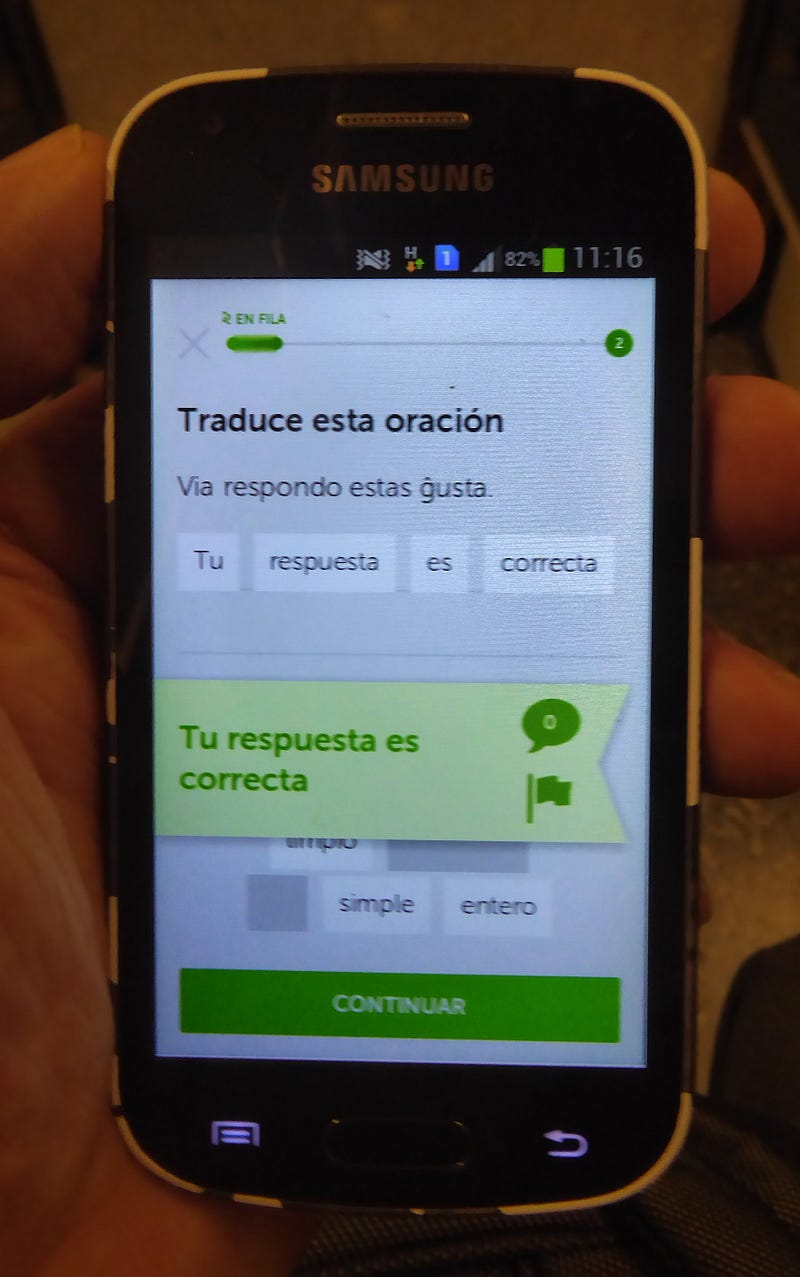
That model did not last. Translation revenue never scaled the way the company needed it to, and Duolingo pivoted — to advertising, to paid subscriptions, and to the Duolingo English Test, a cheap online alternative to the expensive exams that guard university admission.
But the part that mattered most was never the business model. It was the trick that kept people coming back.
Duolingo is built like a game. There are experience points. There are leagues you climb, bronze to diamond. There are leaderboards, and there is the streak — the small counter that tells you how many days in a row you have shown up, and quietly makes you afraid to lose it.
None of that teaches you Spanish, exactly. What it does is solve human computation’s oldest problem: getting people to show up, and to keep showing up. Language learning is slow and easy to abandon. A streak is a reason not to.
It worked. Duolingo went public in 2021. By early 2025, around 130 million people were opening the app every month — students, travelers, refugees, anyone with a phone and five spare minutes — most of them learning a little every day because a cartoon owl had made it feel like a game they would lose if they stopped.
What Luis Von Ahn Actually Built
Step back from the three stories, and they are plainly the same story.
Find a task that is trivial for humans and impossible for computers. Do not build a tool for it and then beg people to use the tool. Instead, hide the task inside something people already want to do — a game, a security check, a daily lesson — and collect the result as a by-product.
Label the web’s images. Read the world’s unreadable books. Teach a language to anyone with a phone. A hired workforce did none of it. All of it was done by the public, in spare seconds, mostly without noticing.
It is fair to feel slightly uneasy about this. It is, after all, a method of extracting enormous amounts of unpaid labor from people without quite telling them. That should be said plainly.
But look at what each side actually walked away with. With the ESP Game and reCAPTCHA, the players got a few minutes of fun, or nothing at all, while the world got labeled images and digitized libraries. The deal was lopsided.
With Duolingo, the person doing the work gets the thing of value — an education — for free. Across twenty-five years, von Ahn’s trick grew steadily more honest. The early versions used people. The latest one mostly serves them.
That is the line between a con and an incentive design. A con leaves the mark worse off. Von Ahn’s machine, more and more, leaves you better off than it found you.
The Checkbox
So the next time a website stops you and asks you to prove you are not a robot, look at it for a second before you click.
You are standing inside a machine. It was designed by a professor in Pittsburgh who decided, twenty-five years ago, that your spare seconds were too valuable to throw away. That machine has labeled the internet’s pictures, rescued centuries of printed books, and taught a language to a population the size of a large country.
It runs on ordinary people doing tiny things they barely remember doing.
You have almost certainly been one of them. And the truth is, you probably don’t mind.
Support writers. All our non-profit’s offerings here.
Click here to subscribe to the IT Chronicles newsletter.
Click for Wordsmith, Mystery Writing, Write Like Stephen King, more
By the EIC Susan Brearley with Ideogram