One Lab Invented The Modern Computer And Sold Almost None Of It
One Lab Invented The Modern Computer And Sold Almost None Of It. IT HISTORY One Lab Invented The Modern Computer And Sold Almost None Of It There is a long。
IT HISTORY
One Lab Invented The Modern Computer And Sold Almost None Of It
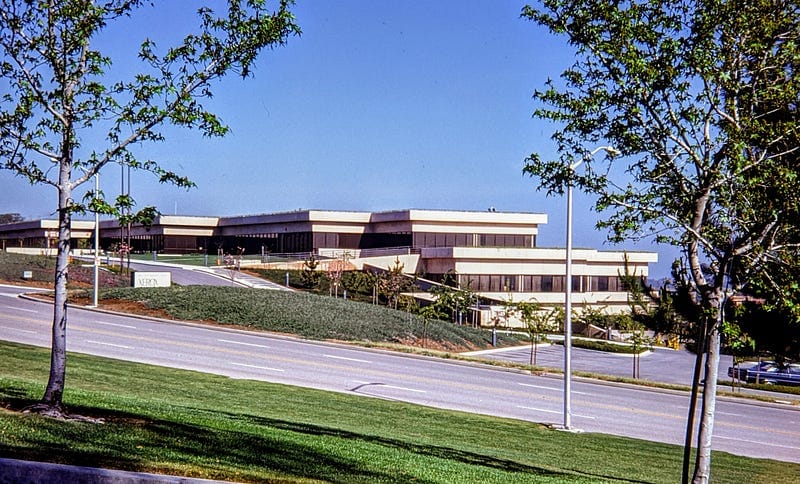
There is a long, low building on a hill above Stanford, at 3333 Coyote Hill Road in Palo Alto. From the parking lot, it looks like a community college.
Walk into that building in 1973, and you'd have found, scattered across its labs in various states of assembly:
A personal computer built around a graphical screen. A mouse, being turned into something a normal person could use. The first editor showed you the page exactly as it would print. An object-oriented programming language. Windows, icons, and a pointer that moved when you moved your hand.
The modern computer. Most of it. One building. Roughly five years.
The lab was Xerox PARC. The company that paid for it sold almost none of it.
This is the story of the most productive research lab in the history of computing, and of why "it failed" is the wrong way to tell it.
The Company That Bought Its Way Into the Wrong Business
To understand PARC, you have to start with a company that had too much money and a quiet kind of fear.
By the late 1960s, Xerox owned the office. Its 914 copier, the first plain-paper copier, was one of the most profitable products any American company had ever made. Money came in faster than anyone could reasonably spend it.
But the people running Xerox could see a shape on the horizon. The office of the future was not going to run on paper. It was going to run on computers. And Xerox sold paper machines.
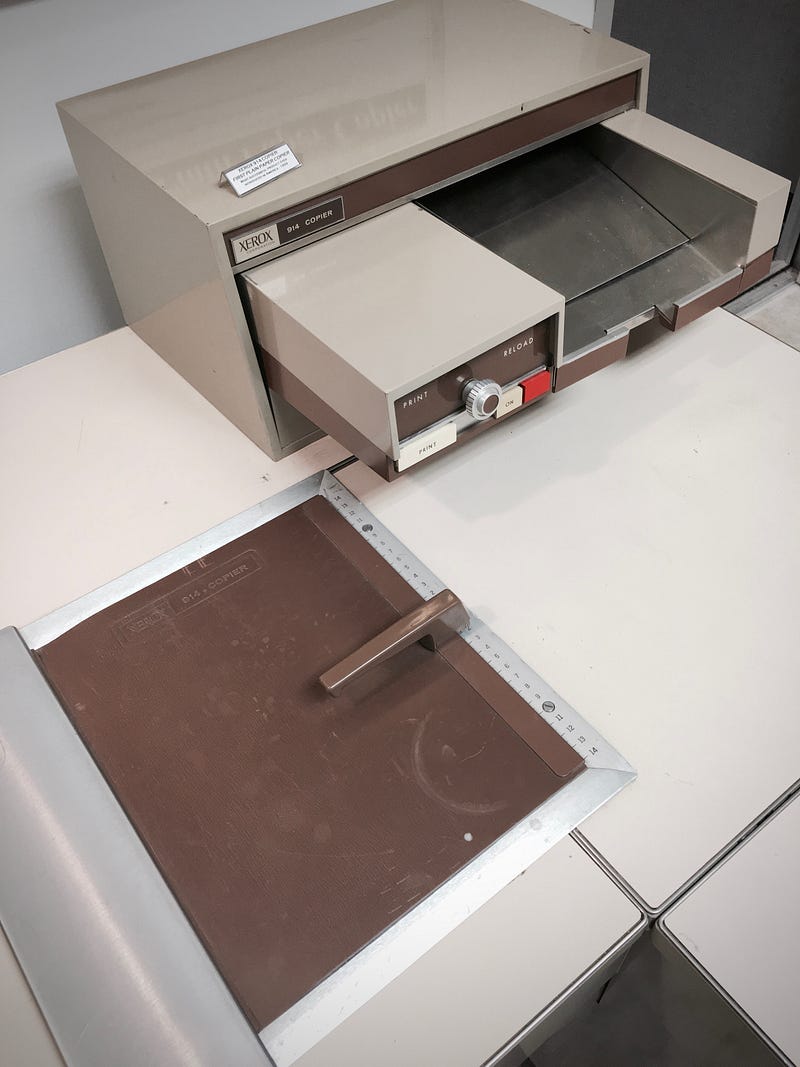
So in 1969, Xerox did the obvious thing. It bought a computer company, Scientific Data Systems, for just under $1 billion, and renamed it Xerox Data Systems.
It was a disaster. SDS built scientific computers, and it never became the business Xerox had paid for. Xerox shut the division down in 1975. The full bill for its adventure in computers came to something like $1.3 billion in losses.
Here is the part worth slowing down for.
Xerox spent a fortune trying to become a computer company, and it failed. But in 1970, almost as a footnote to that same ambition, Jack Goldman, Xerox's chief scientist, talked the company into funding a research center. A physicist named George Pake built it, 3,000 miles from headquarters, on that hill in Palo Alto.
Xerox bought the wrong thing. The thing that almost didn't get funded would invent the next forty years of computing.
The Greatest Concentration of Talent in Computing
PARC opened at an unusually lucky moment.
The Vietnam War had soured Washington on open-ended research. ARPA, the agency behind the ARPANET, was under pressure to make its grants appear "mission-oriented," and funding for blue-sky computing work at universities began drying up.
So a generation of the field's best people was suddenly available. Xerox was hiring, with copier money, and paying well.
They came from ARPA's old orbit, from Stanford's research institute, from MIT, from the University of Utah. Alan Kay, who was there, liked to say that by the mid-1970s, something close to half of the world's hundred best computer scientists were working at PARC.
That is a stunning claim. The work that came out of that building makes it easy to believe.
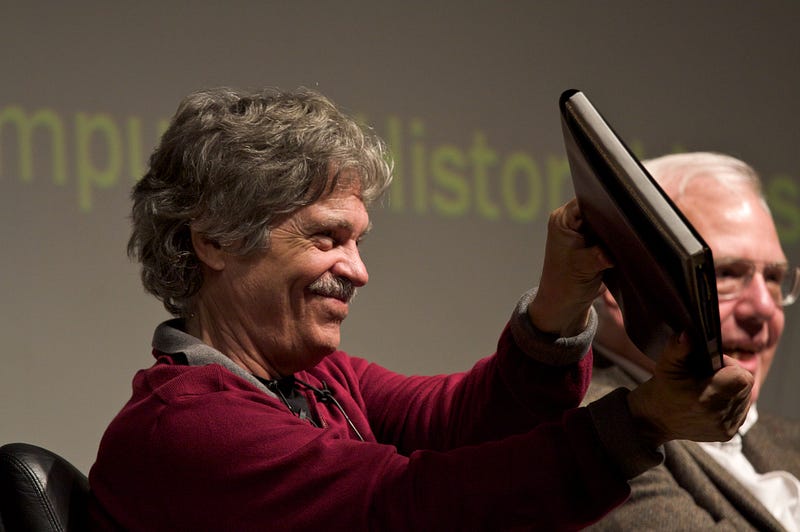
The lab ran on a culture that would make a modern HR department nervous. Bob Taylor, who led the Computer Science Laboratory, was not a computer scientist at all. He had been a research administrator at ARPA. What he was good at was protecting smart people and making them argue well.
Every week, the lab held a meeting of its members called "The Dealer." One researcher would stand and present an idea, and the rest of the room would try to tear it apart.
Taylor had one rule: attack the idea, never the person. He drew a line between two kinds of disagreement: the kind where neither side can even state the other's position, and the kind where both can. The first kind, he shut down. The second kind he let run, because that was where good ideas got made.
PARC had a second rule. You had to build the thing. Not a slide, not a demo. A real system. If it were software, a hundred people had to be able to use it. If it were hardware, you had to build a hundred. An idea that couldn't survive contact with real hardware didn't count.
Out of those two rules, in barely five years, came this:
The Xerox Alto arrived on March 1, 1973: a computer built for one person, not a department. The graphical user interface: windows, icons, a pointer: Smalltalk, Alan Kay's object-oriented language. Bravo, the first what-you-see-is-what-you-get editor, was written by a young programmer named Charles Simonyi. And on May 22, 1973, two researchers, Robert Metcalfe and David Boggs, got a network running between machines. They called it Ethernet.
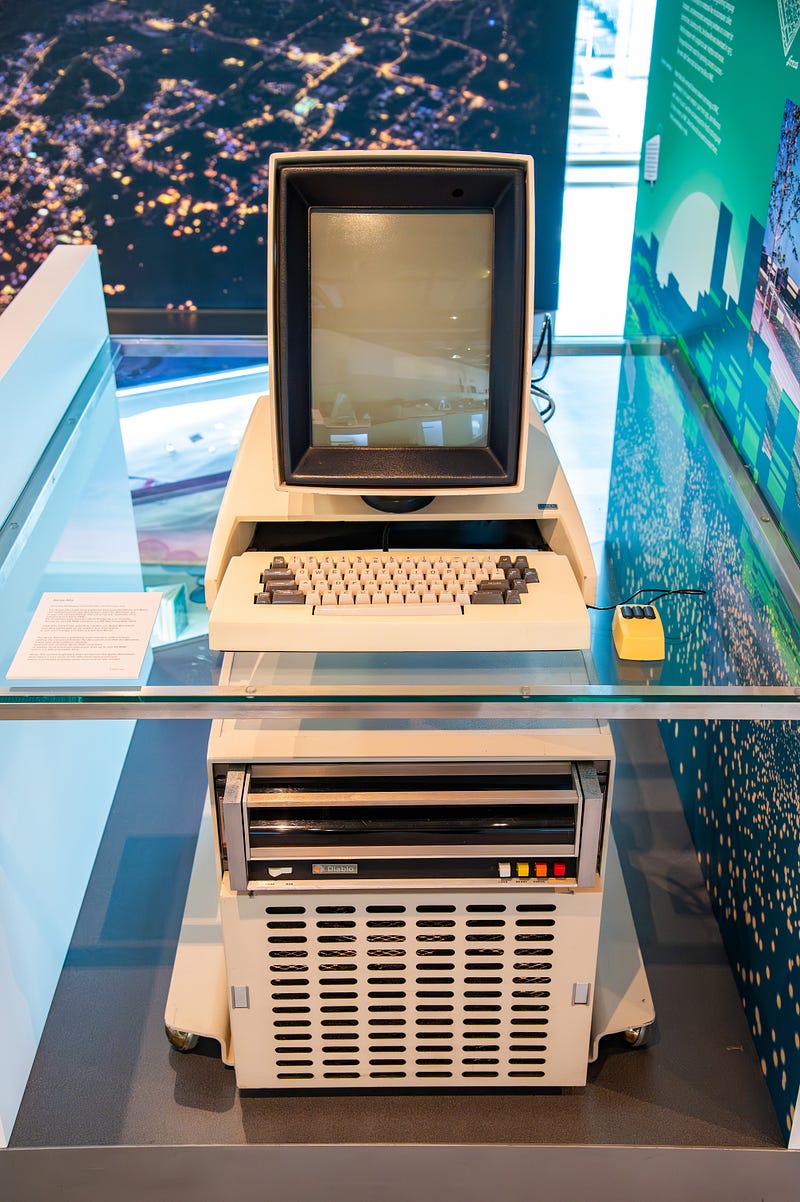
They built the future and ran it, every day, in one building. About 2,000 Altos were made. Xerox sold zero of them to the public.
December 1979
In December 1979, a young Steve Jobs walked into PARC.
He had not talked his way in. Xerox invited him. Apple was about to go public, and Xerox's venture arm wanted a piece, so a deal was struck. Xerox could buy 100,000 shares of pre-IPO Apple stock for about $1 million, and in return, PARC would show Apple's people what it was working on.
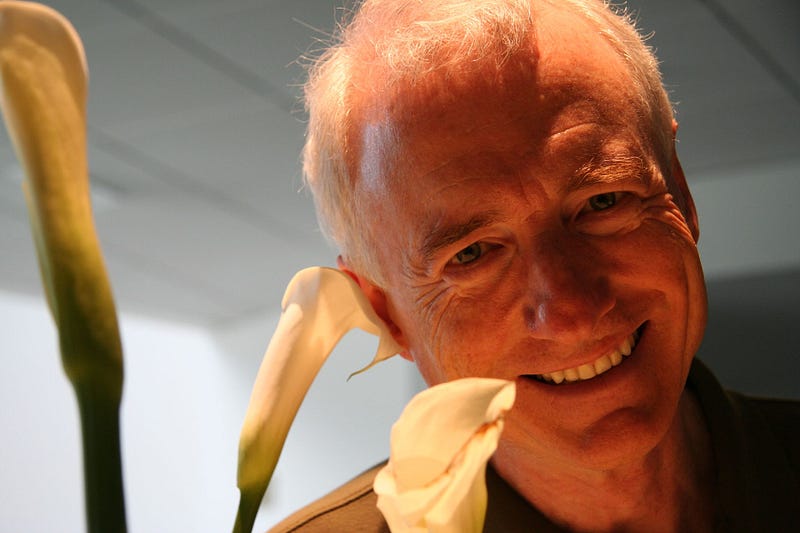
A PARC researcher named Larry Tesler ran the demo. He moved a mouse. The cursor tracked it. He clicked, and windows opened and closed.
Jobs came undone. Years later, he described it without embarrassment:
“I was so blinded by the first thing they showed me, which was the graphical user interface. I thought it was the best thing I’d ever seen in my life.”
He saw three things at PARC that day. He registered one. The other two, Smalltalk's object model and PARC's networking, went straight past him, and he admitted it.
Tesler watched the Apple people the way you watch someone finally hear a song you've been humming for years.
“After an hour looking at demos, they understood our technology and what it meant more than any Xerox executive understood after years of showing it to them.”
This is the moment the familiar story turns into an accusation. Jobs walked into Xerox's lab, saw the future, and walked out with it. Four years later, the Macintosh shipped, and to most of the world, the graphical interface looked like Apple's idea.
Theft. That's the Word the story usually reaches for.
It's wrong.
It Wasn't Theft. And It Wasn't Blindness Either.
Start with the theft. There wasn't one. There was a trade.
Apple let Xerox buy 100,000 shares of its stock before the IPO. In return, Xerox let Apple's team walk through PARC. Within a year of that IPO, the shares were worth far more than Xerox had paid for them. Xerox got something concrete and valuable for opening the door, which is more than most victims of theft can say.
And the Apple team took no code or hardware out of PARC. They carried ideas, and then did years of original, brutal work to turn a research system into something a person could buy and use. The demo Jobs saw had no menu bar, no pull-down menus, and no consistent grammar that held across every program. Apple built all of that. Larry Tesler thought the work mattered enough that he quit Xerox and joined Apple to keep doing it.
So: not theft.
Now the other story. The comfortable one, where Xerox management was fools who couldn't see what they were sitting on. Jobs told that version himself:
“Xerox could have owned the entire computer industry today. Could have been a company ten times its size. Could have been the IBM of the nineties. Could have been the Microsoft of the nineties.”
It's the version everyone repeats. It's also wrong.
Xerox funded PARC generously for a decade. It knew the Alto was remarkable. And it did try to sell the future: in 1981, it shipped the Xerox Star, a commercial machine with a graphical interface, networking, and built-in laser printing.
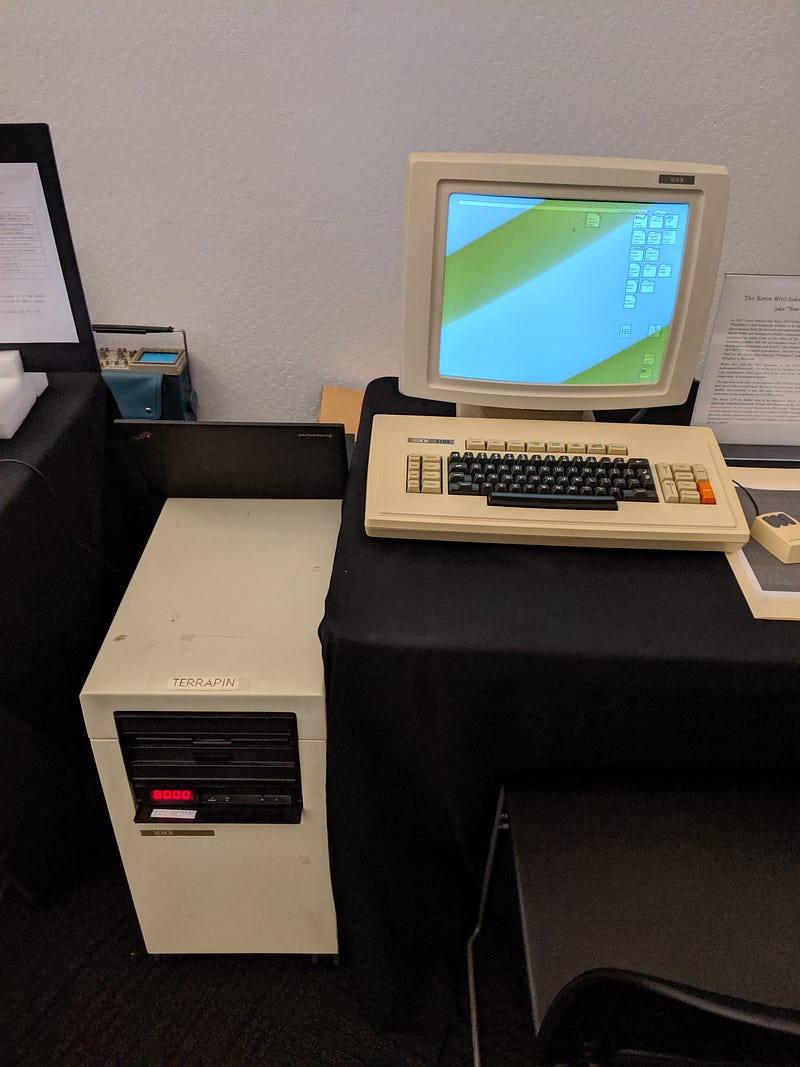
The Star was not a failure of vision. It was a failure of price, speed, and a closed design. A single workstation costs $16,595. A useful office setup — workstations, a server, a printer — ran around $75,000. It was slow and closed: you could not write your own software for it. Xerox sold about 25,000—the market it was built for bought IBM PCs instead, at a tenth of the cost.
And here is the detail that the "Xerox was blind" story always skips.
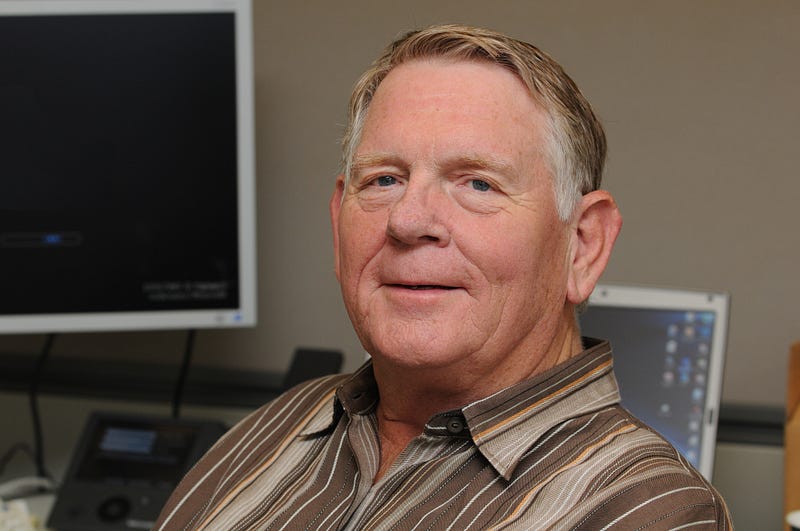
The one PARC-adjacent technology Xerox did commercialize brilliantly, the laser printer, almost didn't make it either. Gary Starkweather invented laser printing at an Xerox lab in 1969, and then spent years fighting his own management, who thought aiming a laser at a spinning drum was a fine way to start a fire. He had to be quietly moved to PARC to finish the work. It went on to earn Xerox billions.
The company wasn't blind. It funded PARC for a decade, shipped the Star, and, once it pushed past its own doubts, turned the laser printer into one of the most profitable products it ever made.
So if it wasn't theft, and it wasn't stupidity, what was it?
A Funnel That Only Pointed One Way
The answer isn't really about Xerox. It's about a model of innovation that, around 1979, was quietly running out of road.
A business scholar named Henry Chesbrough went looking for that model years later. He studied the companies that had spun out of Xerox, the projects and people who left to commercialize an idea Xerox wouldn't. And he gave the old approach a name: closed innovation.
Closed innovation is simple, and for most of the twentieth century, it worked. You hire the smartest people. You fund them to invent things internally, in secret. You ship those things through your own sales channels. You take the profits and pour them back into the lab. Bell Labs ran this way. IBM ran this way. So did Xerox.
The logic only holds if two things stay true: your smart people stay, and your channels are the only road to market. By the late 1970s, in Northern California, neither one was true anymore.
Three forces had broken the walls of the funnel.
Engineers had become mobile. They carried hard-won knowledge straight out the door to new employers, and no employment contract could hold it in. Venture capital had arrived, and it could turn a departing engineer's idea into a funded company in months. And technology cycles were getting shorter, so the lag between "we invented it" and "someone else shipped it" turned fatal.
PARC's people no longer needed Xerox's permission or Xerox's sales force. They could leave. The idea was left with them, and the market was waiting.
Chesbrough counted. Of the technologies that left Xerox for independent companies, he studied 11. By the time he added up the value of those companies, the total came to roughly twice Xerox's market value.
Read that again. The work Xerox "failed" to commercialize was, in the end, worth more than Xerox.
That is not a company failing to innovate. It is a company innovating by breaking the rules that the world had just stopped using.
The Future, Reassembled Elsewhere
Watch where the people went.
Robert Metcalfe took Ethernet and left to start a company called 3Com. Ethernet became the way computers talk to each other; in 2022, Metcalfe was given the Turing Award for it.
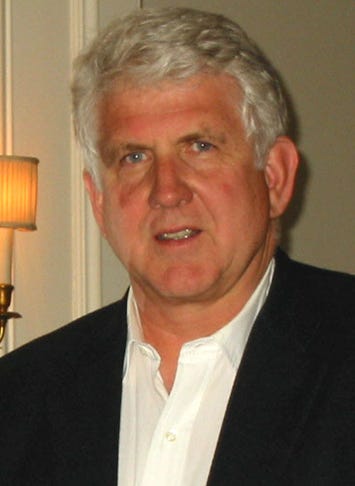
Charles Simonyi took his what-you-see-is-what-you-get editor to a small company in Seattle called Microsoft. It became Word.
Two PARC researchers, John Warnock and Charles Geschke, wanted to commercialize a PARC system for describing pages to a printer. Xerox wasn't interested. They left and built it themselves. The company was Adobe; the technology became PostScript, and then PDF.
Larry Tesler, the man who gave Jobs the demo, joined Apple and spent years making the interface real.
The Alto's own architects, Butler Lampson and Charles Thacker, would each receive the Turing Award, computing's highest honor, for the work done in that building. So would Alan Kay.
Now look at the screen in front of you.
The overlapping windows, the icons, the pointer: that argument was won at PARC. The network your machine sits on is Ethernet, May 1973. PDF itself descends from PostScript, out of PARC by way of Adobe. The office printer down the hall is Starkweather's laser, the one Xerox almost set fire to.
PARC didn't lose any of it. It is all still running. It just has other companies' names on it.
The Address That Stayed the Same
So go back to the building.
3333 Coyote Hill Road is still there. Xerox spun PARC off into a separate company in 2002 and, in 2023, donated it to SRI International. The Xerox name is off the door.
Walk the halls in 1973, and you would have seen the modern computer being born, piece by piece, by a few hundred people who were allowed to argue and build. Walk them now, and you'll find a research lab much like any other.
It is tempting to call that a tragedy. It isn't, quite.
Xerox PARC did not fail to invent the future. It invented the future so completely, and so far ahead of the company that owned it, that no single company could keep it. The inventions didn't die. They diffused into Apple, into Adobe, into Microsoft, into 3Com, into the machine you are reading this on.
The model that was supposed to capture all of it for one owner — hire the best, invent in secret, ship through your own door — died right about then. What replaced it is the leaky, open, faster way the whole industry works now.
The lab got the future right. It just didn't get to keep it.
And the building, the one that still looks like a community college, kept its address.
Support writers. All our non-profit’s offerings here.
Click here to subscribe to the IT Chronicles newsletter.
Click for Wordsmith, Mystery Writing, Write Like Stephen King, more
By the EIC Susan Brearley with Ideogram