I Don’t Think Companies Are Spying Through Your Microphone to Serve Ads.
I Don’t Think Companies Are Spying Through Your Microphone to Serve Ads.. Recently, Apple ended a class action lawsuit against Siri for recording private c。
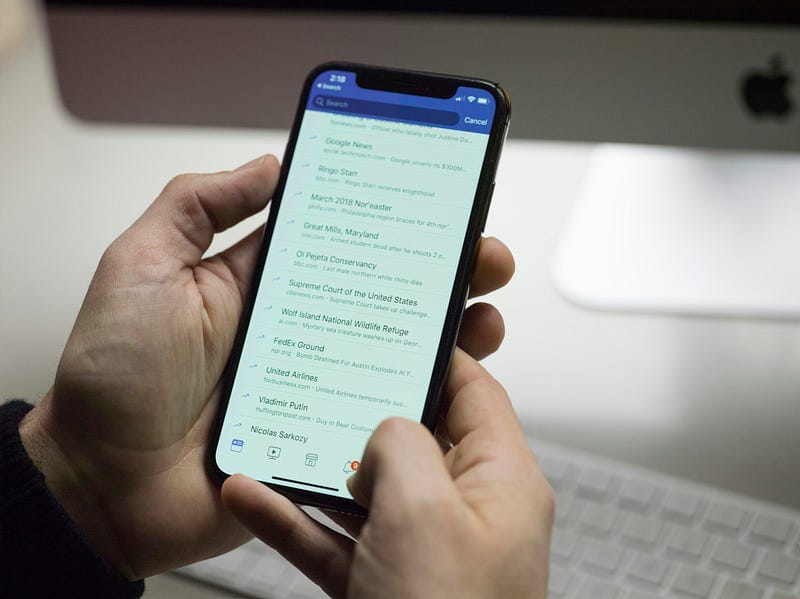
Recently, Apple ended a class action lawsuit against Siri for recording private calls, possibly for advertising purposes, when Siri didn’t wake up with the “Hey, Siri” wake-up call by paying 9 hours of profit ($95 million). While the dust has settled on this case, I’d like to make a technical point that I still don’t believe cell phones are spying on people by recording them.
Analysis
Suppose there are 1.5 billion active iPhone devices. Each device listens for one hour daily, and the data is retained for one year. By estimation, we can get the following data.
Storage cost
AAC encoding was used with a 128 kbps sampling rate. The amount of data for one year is about

The AWS oss price is $0.00099/GB/month. The cost is then

Cost of arithmetic
Speech files need to be processed by a speech recognition model (Whisper, DeepSpeech, etc.). I’m not particularly familiar with arithmetic power estimation, so here’s a quote from OpenAi’s API price of $0.006/min
Then, the computational power cost is

Human costs
Suppose 1000 people are invested in this project to do this. Each person’s salary is $200k, and the labor cost is

So, the final one-year budget for this project is
400 + 197,100 + 200 = 197,700 million, or 197.7 billion.That's a comprehensive calculation, and it's certainly a far cry from reality. However, providing speech recognition services to 1.5 billion people would be a huge expense.
However, Apple's total advertising input 2024 is about $7 billion. Most of this is Apple Store revenue. Ads on the Apple Store don't require a voice message on your phone to get them; they need it based on your search habits, which are already well established.
What can we do?
While I still don’t believe that giants will collect user privacy through voice messages near real-time cell phone users, the giants now have more information than we know. They may not know my name, but they may know more about me than I know myself. Every click, search record, voice command, and even our inadvertently exposed living habits have become data resources in their hands. They already have more efficient and secretive means of collecting our privacy, but we can’t do anything about it.
The original intention of developing the Internet was to connect the world and provide convenience and freedom. However, as technology progresses and business models evolve, we gradually realize that the extensive collection of personal data lurks behind the so-called “convenience.” From search engine keywords to likes and comments on social media and the voice and images captured by smart devices, these subtle actions and data have quietly crafted a complete “digital portrait.”
This type of portrait records our past behavior and predicts our future actions. It understands our music preferences, clothing style, and favorite restaurants and can even forecast when we might get sick or decide to change our mobile phones. Behind all this is a data algorithm that major companies continuously refine to effectively advertise, enhance user engagement, and generate commercial benefits.
What’s more helpless is that this kind of privacy “encroachment” is often silent. We thought we could protect ourselves by turning off specific permissions and clearing browsing records, but this is false. Countless invisible trackers are still running without our knowledge, analyzing our behavior and generating new data. When we try to counter it with tools, the giants have used technical means to What’s more disheartening is that this kind of privacy “encroachment” often occurs silently. We believed we could protect ourselves by turning off specific permissions and clearing our browsing history, but that isn’t the case. Countless invisible trackers continue to run without our knowledge, scrutinizing our behavior and generating new data. When we attempt to counter this with tools, the tech giants cleverly use technical means to obscure their data collection methods further.
What can we do in light of this situation? The answer may be disappointing — we feel almost powerless. We can choose not to use specific applications, avoid smart devices, and disconnect from the Internet, but achieving this is nearly impossible in today’s society. The Internet has become deeply ingrained and is now perceived as necessary for modern life.
The only action is to raise awareness about privacy protection, actively learn the scope and methods of data collection, and minimize unnecessary information exposure. Additionally, we advocate for stricter laws and regulations to encourage companies to enhance transparency and limit excessive data gathering. Even so, we cannot entirely escape the reality of this “digital monitoring.”
Under the giants’ business practices, individual power feels incredibly limited, which is disheartening. Every time we enjoy the convenience of technology, we do so at the cost of our “privacy.” Is this exchange equitable? Do we still have the right to choose? These questions may demand deep reflection, but the answers likely won’t be encouraging. Hide data collection more cleverly.

What can we do in this situation? The answer may be disappointing — almost powerless. We can choose not to use specific applications, not to carry smart devices, and not to connect to the Internet, but this is nearly impossible in today’s society. The Internet has long been deeply embedded in our lives and has become necessary.
The only thing we can do is to enhance the awareness of privacy protection, actively understand the scope and methods of data collection, and minimize unnecessary information exposure. At the same time, we call for stricter laws and regulations to promote enterprises to strengthen transparency and reduce excessive data collection. But even so, we still can’t eliminate the fate of this “digital monitoring”.
Under the business rules of the giants, personal power is weak, and we are helpless. Every time we enjoy the convenience of technology, we exchange it for “privacy.” Is this exchange fair? Do we still have the right to choose? These questions may require us to think deeply, but I’m afraid the answers are not optimistic.
I can't quit using the Internet, so I use it safely.
- Try to use giant APPs. It is not that giant APPs will not collect privacy, but compared with small companies, they are more regulated and more considerate in the use of privacy.
- Turn off all permissions that can be turned off.
- Reduce the information flow App. Include news, short videos, etc.; actively select messages instead of being fed by algorithms; and avoid being trapped in the information cocoon room.
Whatever else is up to them.