Go High-Performance Programming EP11: lock-free coding
Go High-Performance Programming EP11: lock-free coding. Introduction The previous article discussed two lock-free programming strategies: eliminating share。
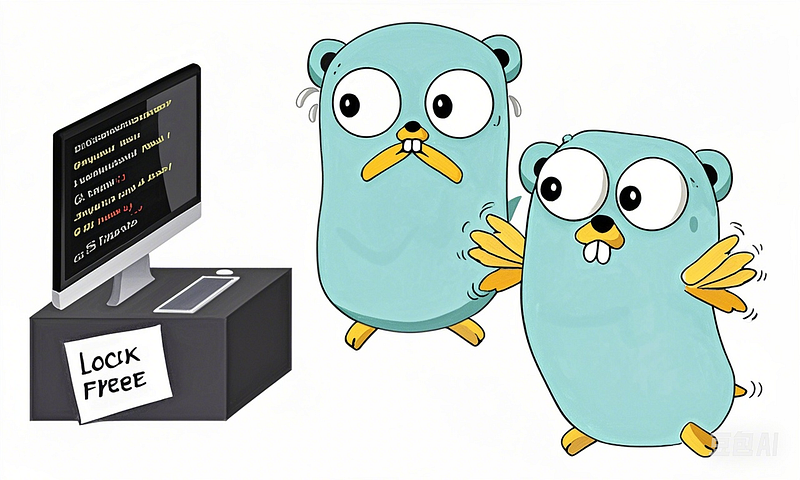
Introduction
The previous article discussed two lock-free programming strategies: eliminating shared data and avoiding concurrent access to the same data through careful design. While achieving lock-free programming is ambitious, it could be more practical. Generally, when discussing lock-free techniques, the aim is to avoid locks, and using Compare-And-Swap (CAS) is a good alternative. If CAS is insufficient, we can minimize the granularity of Mutex or replace it with RWMutex.
Advantages of Lock-Free Programming
- Reduces thread blocking and waiting time
- It avoids thread priority inversion.
- Improves concurrency performance.
- Eliminates issues like race conditions, deadlocks, and starvation.
- Simplifies and clarifies code.
This article will explore and implement several lock-free programming techniques in Go.
Channel
The Go language advocates for the principle of sharing memory through communication, as stated in its official blog: Share Memory By Communicating
Do not communicate by sharing memory; instead, share memory by communicating.
Channels enable lock-free programming because:
- Channel transfer ownership of data.
- The channel uses internal locks for synchronization.
For example:
type Resource string
func Poller(in, out chan *Resource) {
    for r := range in {
        // Process the URL
        // Send the processed Resource to the output channel
        out <- r
    }
}
Data flows between in and out channels without multiple goroutines operate simultaneously on the same data, achieving a lock-free design.
CAS (Compare-And-Swap)
Modern CPUs support atomic CAS operations, allowing atomic data exchange in multithreaded environments. CAS helps avoid data inconsistencies caused by unpredictable execution orders and interruptions.
more about CAS: Decrypt Go: Atomic Package Addressing Concurrency Issues
Lock-Free Stack Using CAS
A stack can typically be implemented with slice and RWMutex for concurrency safety. Alternatively, CAS can be used to implement a lock-free stack.
Below is an example:
Benchmarking
A simple benchmark test shows the lock-free stack outperforms the slice + RWMutex implementation by approximately 20%.
The performance gains are even more significant in high-concurrency scenarios.
func BenchmarkConcurrentPushLockFree(b *testing.B) {
    stack := NewStackByLockFree()
    for i := 0; i < b.N; i++ {
       stack.Push(i)
    }
}
func BenchmarkConcurrentPushSlice(b *testing.B) {
    stack := NewStackBySlice()
    for i := 0; i < b.N; i++ {
       stack.Push(i)
    }
}
➜ lock-free git:(main) ✗ go test --bench=.
BenchmarkConcurrentPushLockFree-10 22657522 49.66 ns/op
BenchmarkConcurrentPushSlice-10 29135671 59.04 ns/opStruct Copy: Trading Space for Time
Struct Copy is a technique that avoids data contention by duplicating shared resources. Each goroutine operates on its copy, eliminating the need for locks.
example:
Each goroutine owns a unique instance by wrapping shared resources with a BufferWrapper, avoiding data races, and using sync.Pool further optimizes memory allocation.
Benchmarking
func BenchmarkSingleBuffer_print(b *testing.B) {
    for i := 0; i < b.N; i++ {
       run_buff_bench(singleBuff)
    }
}
func BenchmarkBufferWrapper_print(b *testing.B) {
    bufferWrapper := NewBufferWrapper()
    for i := 0; i < b.N; i++ {
       run_buff_bench(bufferWrapper)
    }
}
func run_buff_bench(buff printId) {
    wg := sync.WaitGroup{}
    f := func(id int) {
       defer wg.Done()
       for j := 0; j < 10000; j++ {
          buff.print(id)
       }
    }
    for j := 0; j < 100; j++ {
       wg.Add(1)
       go f(j)
    }
    wg.Wait()
}
BenchmarkSingleBuffer_print-10 4 261640427 ns/op
BenchmarkBufferWrapper_print-10 67 18320110 ns/opA similar technique is used in fastjson’s Parser. We see this operation in many performance optimization scenarios.
Conclusion
This article explored three practical techniques for lock-free programming in Go, with performance tests validating their effectiveness. While fully lock-free programming is challenging, proper design and technique selection can significantly reduce lock usage and enhance concurrency performance.