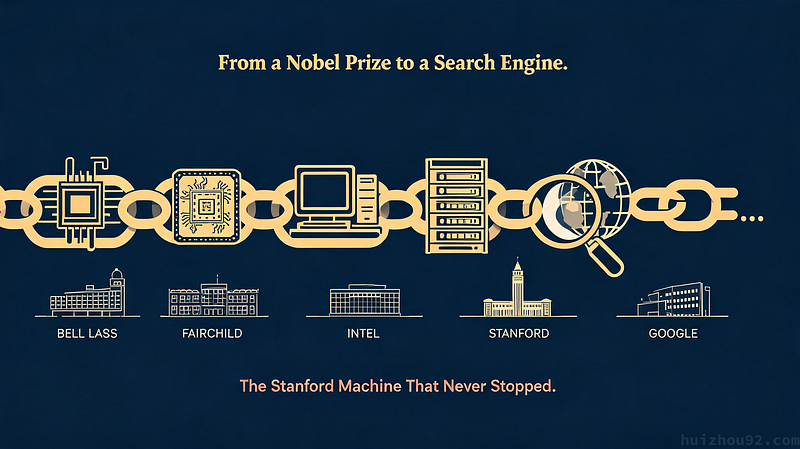
From a Nobel Prize to a Search Engine — The Stanford Machine That Never Stopped
Shockley Brought Silicon, Hennessy Scaled the Model - Google Was Just the Latest Link in a 70-year Chain Reaction
IT HISTORY
From a Nobel Prize to a Search Engine — The Stanford Machine That Never Stopped
Shockley Brought Silicon, Hennessy Scaled the Model — Google Was Just the Latest Link in a 70-year Chain Reaction
Silicon Valley has a brain, and it sits on an old horse farm in Palo Alto. For more than a century, the people, patents, and companies that run the tech industry — Google, Cisco, Sun, Yahoo, LinkedIn, Instagram, and tens of thousands more — have come out of Stanford University. This is the story of how that brain got built, in five parts.
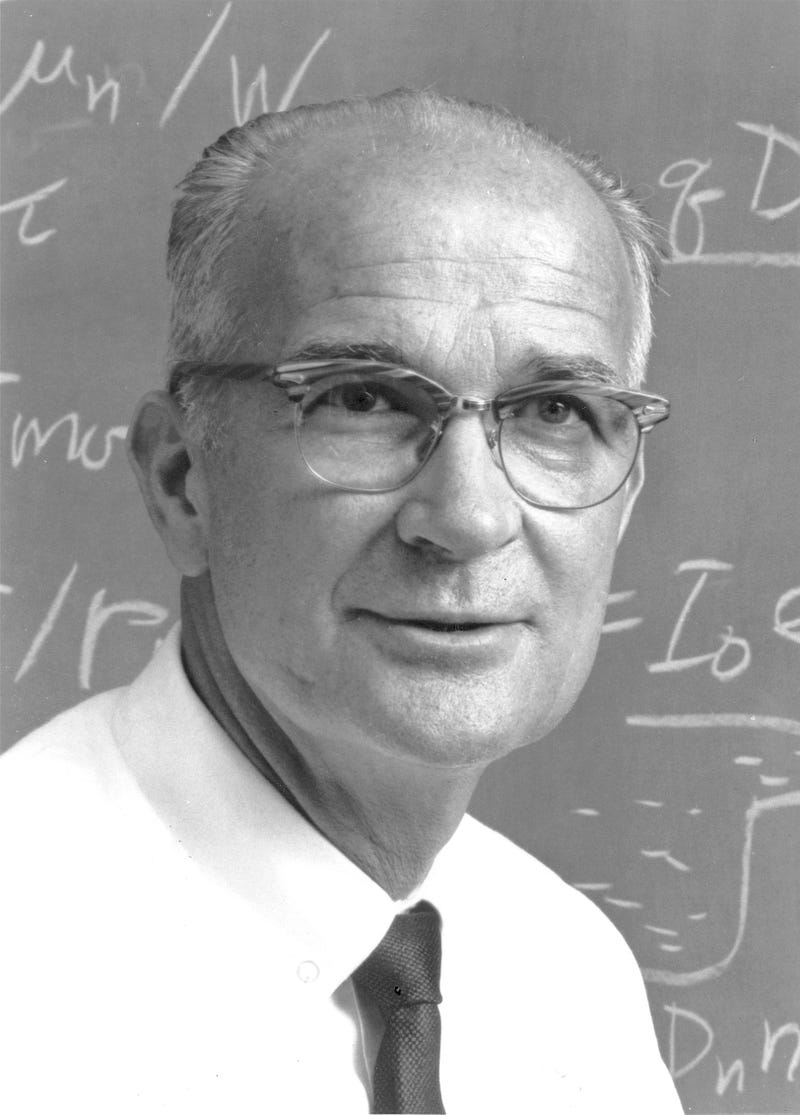
In 1955, William Shockley picked up the telephone and called Frederick Terman.
Shockley had just co-invented the transistor at Bell Labs, work that would win him a Nobel Prize, but he had no interest in staying in New Jersey to publish papers. He wanted to start a company and get rich. “Come to Palo Alto,” Terman told him.
That call brought silicon to the valley that still carries its name. What keeps the valley running, company after company and generation after generation, is the machine Terman built to turn research into companies, students into founders, and ideas into industries. Seventy years later, it still hasn’t stopped.
A Genius Who Couldn’t Manage
Shockley Semiconductor Laboratory opened in 1956 in Mountain View, five miles from Stanford. Shockley recruited the best young physicists and engineers in the country — eight of them, all under thirty — paid them well, and gave them freedom, then proceeded to micromanage, undermine, and alienate every one of them.
Within eighteen months they had had enough. The eight resigned together, found a backer, and founded Fairchild Semiconductor. The “Traitorous Eight,” as Shockley called them, included Robert Noyce and Gordon Moore, the two who would later start Intel.
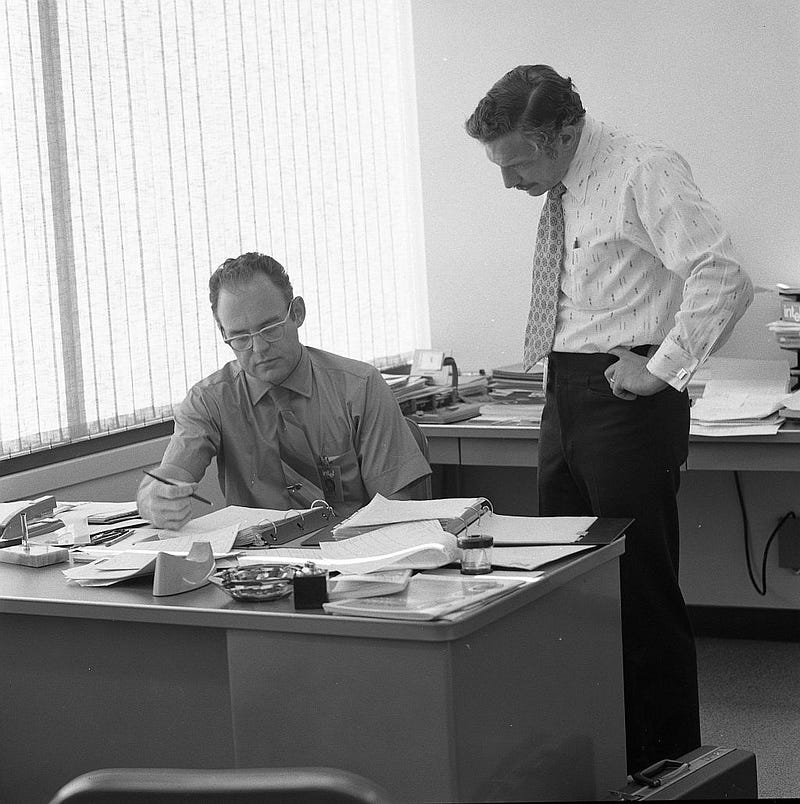
Fairchild went on to build the first commercially viable integrated circuit, and from its DNA sprang not only Intel but AMD, National Semiconductor, and more than sixty-five other firms — the crowd that came to be known as the “Fairchildren.”
Shockley’s own company failed, but Terman had already turned the setback into a gain, bringing Shockley to Stanford as a professor of electrical engineering. The Nobel laureate’s presence lifted the department’s prestige, and silicon, transistors, and integrated circuits took root in the Stanford ecosystem. The episode taught a lesson that stuck: brilliant science still needs business execution, and Stanford would not make that mistake twice.
From Professor to Founder
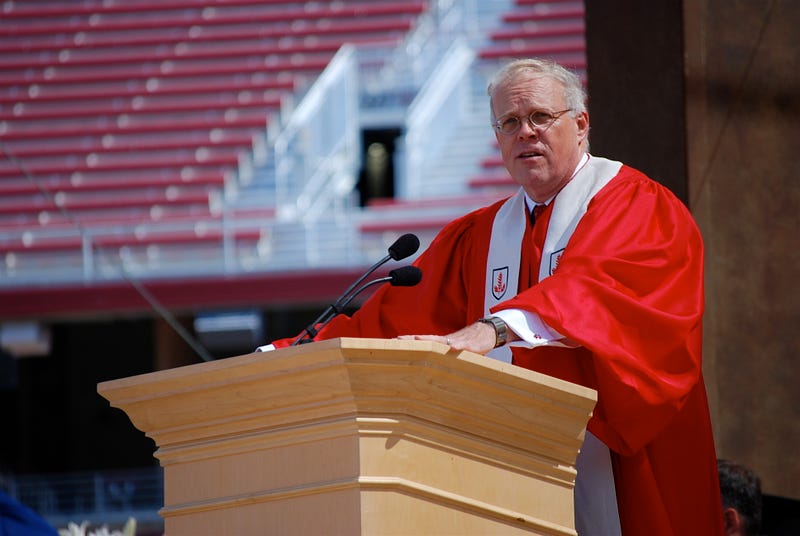
In 1977, a twenty-five-year-old computer scientist named John Hennessy joined Stanford’s electrical engineering faculty as an assistant professor.
His research turned on a radical idea: strip a computer processor down to its simplest possible instructions and make it dramatically faster. The approach was called RISC — Reduced Instruction Set Computing — and the industry orthodoxy insisted it would never work. By 1981, Hennessy and his graduate students had a working RISC processor called MIPS that was faster, simpler, and more power-efficient than anything on the market. In 1984, at thirty-two, he did what Terman had taught Stanford professors to do and left academia to co-found MIPS Computer Systems and commercialize the research.
MIPS processors ended up powering Silicon Graphics workstations, Nintendo 64 consoles, and Cisco routers, and in 1992 SGI acquired the company for $333 million. Hennessy came back to Stanford not as a failed entrepreneur creeping home but as a battle-tested founder who had built and sold a company, and he rose from chair of the computer science department to dean of engineering to university provost. In 2000, he became Stanford’s tenth president.
He never stopped building companies. In the late 1990s, he co-founded Atheros Communications with Stanford electrical engineering professor Teresa Meng to make Wi-Fi chips, and in 2011 Qualcomm acquired it for $3.1 billion. Today Hennessy chairs Alphabet’s board and sits on Cisco’s — Terman’s doctrine made flesh, the professor who builds companies and the founder who comes back to teach.
Born in a Stanford Dorm
In 1996, two Stanford graduate students walked into Hennessy’s office.
Larry Page and Sergey Brin were running a research project that ranked web pages by the number of other pages linking to them. They called it BackRub; it crawled the entire web, produced startlingly good results, and consumed half of Stanford’s network bandwidth in the process. Hennessy told them to keep going.
A year earlier, Jerry Yang and David Filo — two Stanford electrical engineering PhD students — had shown him a different project, a directory of websites organized by category and run out of a trailer on campus. In both projects, Hennessy saw the same thing: the internet was about to remake how humans communicated, and Stanford needed to be at its center. Yang and Filo’s directory became Yahoo, and Page and Brin’s search engine became Google.
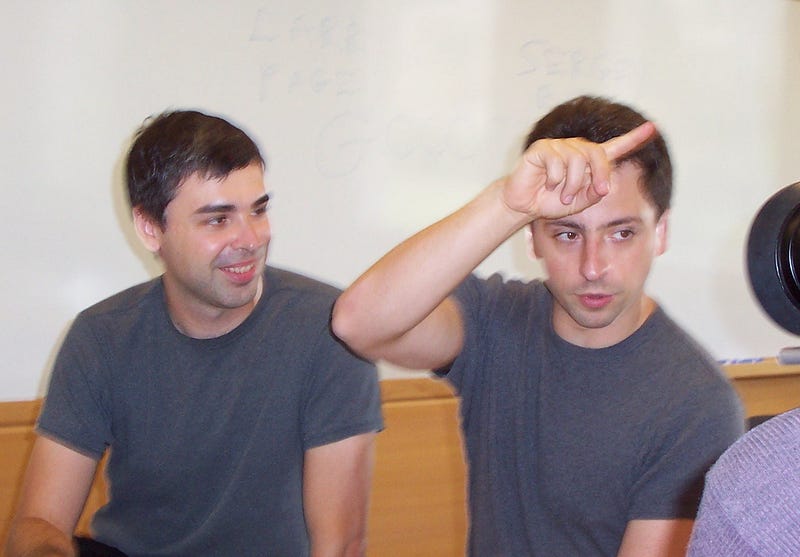
Stanford held the patent on PageRank, the algorithm at the heart of Google’s search engine. In 2005, rather than fight a licensing battle, the university did what it had spent decades learning to do: it traded the patent for Google stock. When Google went public, Stanford sold those shares for $336 million. That money funded new labs, professorships, and student grants — the next round of research that would produce the next round of companies. The machine fed itself.
By the Numbers
Stanford alumni and faculty have founded nearly 40,000 companies, according to a landmark 2012 study, together generating around $2.7 trillion in annual revenue. Gathered into a single country, they would rank as the world’s tenth-largest economy.
Fifty-eight Nobel laureates have been affiliated with Stanford, along with twenty National Medal of Science winners and five Pulitzer Prize winners. The university has produced more living billionaires than any institution except Harvard, with one telling difference — Stanford’s billionaires have overwhelmingly made their money by founding technology companies rather than by inheriting family fortunes.
During Hennessy’s twelve-year presidency, Stanford raised $17 billion in donations, more than any university in history over a comparable stretch, and by the early 2020s its endowment had passed $36 billion. Its patent office has licensed more than 8,000 university inventions to private companies, generating over $1.3 billion in royalties. The names run in the same direction: Hewlett-Packard, Cisco, Sun Microsystems, Yahoo, Google, Netflix, LinkedIn, Instagram, Snapchat, WhatsApp, Tesla — each tracing its founders or its founding technology to Stanford.
The Machine
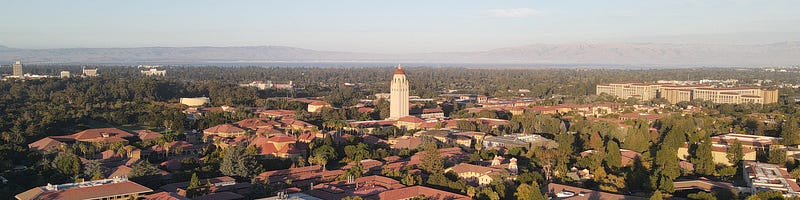
Four things keep it running.
The first is proximity. The campus borders Sand Hill Road, where America’s densest concentration of venture capital sits within walking distance of the labs producing the technologies it funds, so a Stanford PhD who has a breakthrough on Monday can pitch a VC on Tuesday.
The second is permission. At most universities, starting a company is something you quietly apologize for; at Stanford it is something you are expected to do. Faculty take leaves to found startups and come back to teach, graduate students pause dissertations to ship products and defend them later, and no one treats any of it as a lapse in academic commitment — they treat it as the point.
The third is recycling. The money, talent, and knowledge from one generation of Stanford companies flows straight into the next. Google’s early investors included Stanford professors, its first office was a Stanford dorm room, and once it succeeded, its founders endowed Stanford chairs and funded Stanford research. The people who got rich at the last startup become the angels for the next one.
The fourth is patience. Stanford’s technology-transfer office does not demand immediate returns; it takes equity, waits a decade, and cashes out when the company goes public. The Google patent-for-stock trade is the canonical example — a less patient institution would have demanded cash up front and collected a fraction of the value.
Back to 1891
On October 1, 1891, Leland Stanford opened the university before its first students with a plain charge: it existed to prepare them for useful, practical careers. The Founding Grant had set the same goal in writing — its object was “to qualify its students for personal success, and direct usefulness in life.”
Innovation. Enterprise. Design. Execution.
Those four words — a modern distillation of what a railroad baron who had buried his only son wanted his university to produce — hold the entire operating system of Silicon Valley. They are as true for the Stanford sophomore building an AI startup in her dorm in 2026 as they were for Hewlett and Packard in their Addison Avenue garage in 1939.
What Leland Stanford, Jane Stanford, Frederick Terman, and John Hennessy built across four generations is not a campus or a patent portfolio. It is a conviction about what a university is for. Not to escape the world, but to build it.
Support writers. All our nonprofit’s offerings here.
Click here to subscribe to the IT Chronicles newsletter.
Click for Wordsmith, Mystery Writing, Write Like Stephen King, more
By the EIC Susan Brearley with Ideogram