Apple Spun Out a Smartphone Company Before the iPhone
A 1994 touchscreen communicator sold only a few thousand units — its alumni later built the iPhone and Android
IT HISTORY
Apple Spun Out a Smartphone Company Before the iPhone
In 2018, I watched the documentary General Magic and stopped at Tony Fadell’s account of 1994: a touchscreen communicator had shipped, its team had worked punishing hours, and only a few thousand units found buyers. Fadell would later help build the iPod and the iPhone.
General Magic did not fail because its people failed to imagine the phone in your pocket. It failed because the system required to make that vision useful was outside its control. Networks were slow and metered. Hardware was expensive. Carriers and partners had little reason to make the product cheaper or more capable.
That is what makes the company more interesting than another “too early” story. It had a credible product vision, famous backers, hardware partners, and a public market debut. It still could not make the surrounding system move with it.
Apple spins out the Macintosh team
After Steve Jobs lost the 1985 power struggle at Apple, several key Macintosh contributors remained. Bill Atkinson, Andy Hertzfeld, Joanna Hoffman, and Susan Kare had helped ship the original Mac; Marc Porat soon brought Apple a proposal for a handheld communications device.
The project began inside Apple as Paradigm and became General Magic in 1990. Apple retained a stake, and Sony and Motorola joined as hardware partners. John Sculley, Apple’s CEO at the time, backed the effort.
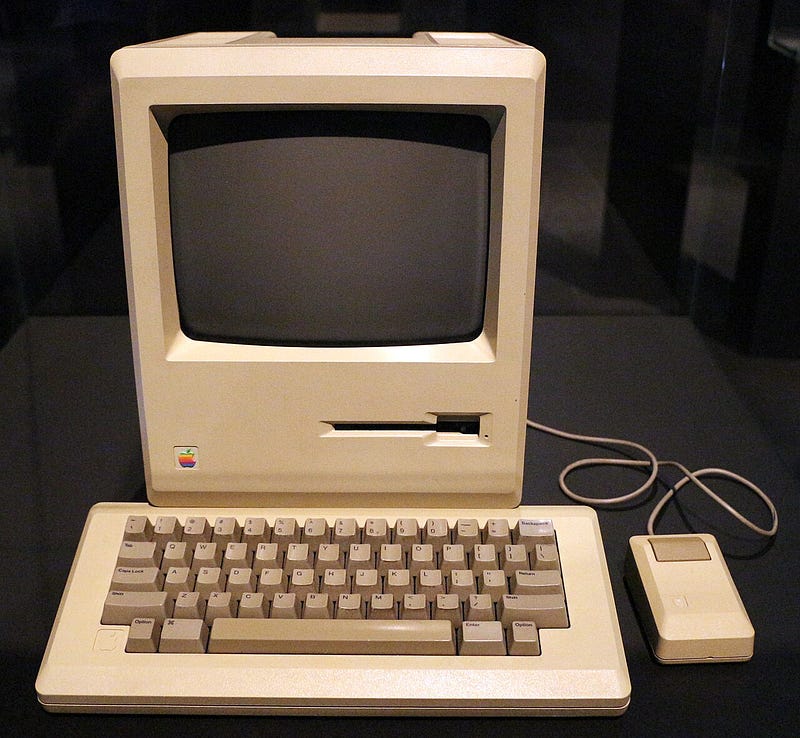
The point was not to recreate the Mac in miniature. Porat’s argument was that personal computing would become personal communication: a device you carried, a network that did work for you, and software that traveled beyond the box in your hand.
A communicator without its platform
General Magic built Magic Cap, an operating system with a pen-oriented interface, and Telescript, a language for mobile software agents. The company’s 1990s office recordings survive in the documentary, which is why this period feels unusually close rather than reconstructed from press releases.
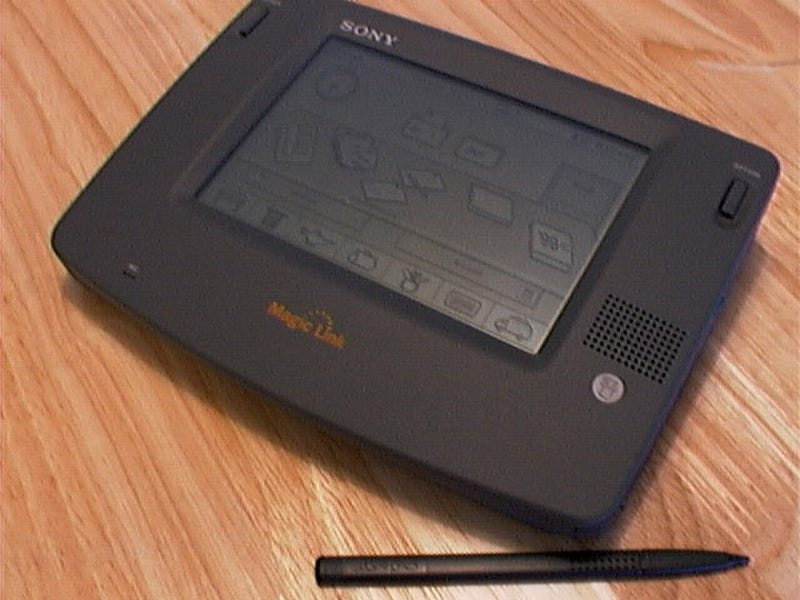
Sony released the Magic Link in September 1994. Motorola followed with the Envoy in January 1995. Both paired a touchscreen with a pen. They could reach network services and run downloadable software. These were not iPhones in disguise. They were early personal communicators whose pitch contained several ideas modern phones later made ordinary.
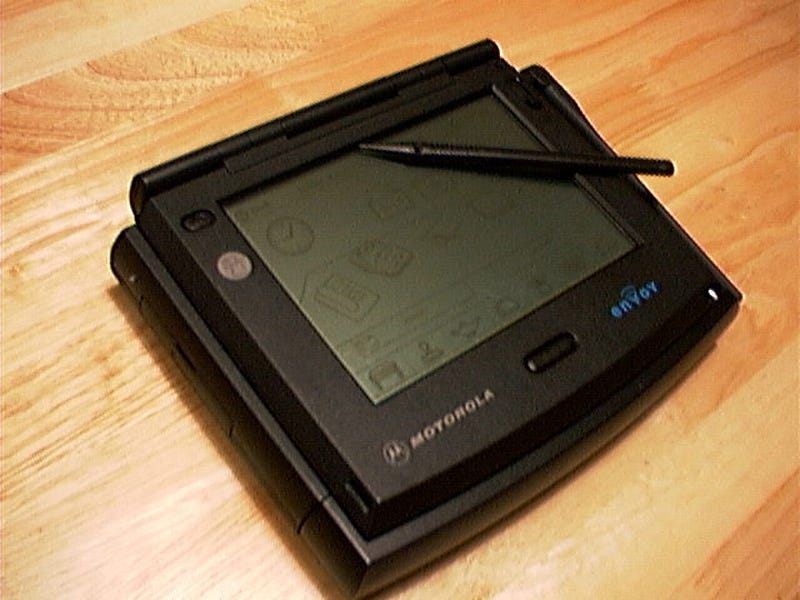
The company did not have the platform it needed. It had hardware partners, a carrier service called PersonaLink, and a small set of services. That arrangement put the essential parts of the experience in other companies’ hands.
Why the system could not carry it
The failure was not three unrelated inconveniences. One constraint made the next one worse.
Network access was slow and usually metered. Many users reached PersonaLink through a modem. It was a closed service rather than an open Internet connection, so a device meant to bring information to you became costly and awkward to use often.
That cost kept the installed base small. A small audience gave carriers and hardware partners little reason to subsidize the device. It also left developers with little reason to build a broad software library. General Magic could design Magic Cap and Telescript; it could not make the network cheap or make its partners share the same incentive.
The hardware added another constraint. The Magic Link cost about US$800 and weighed roughly 1.5 pounds. Its ambitions exceeded the processors and batteries of the time. Pen recognition also disappointed. A strong interface could not compensate for a device that felt expensive before it had proved useful.
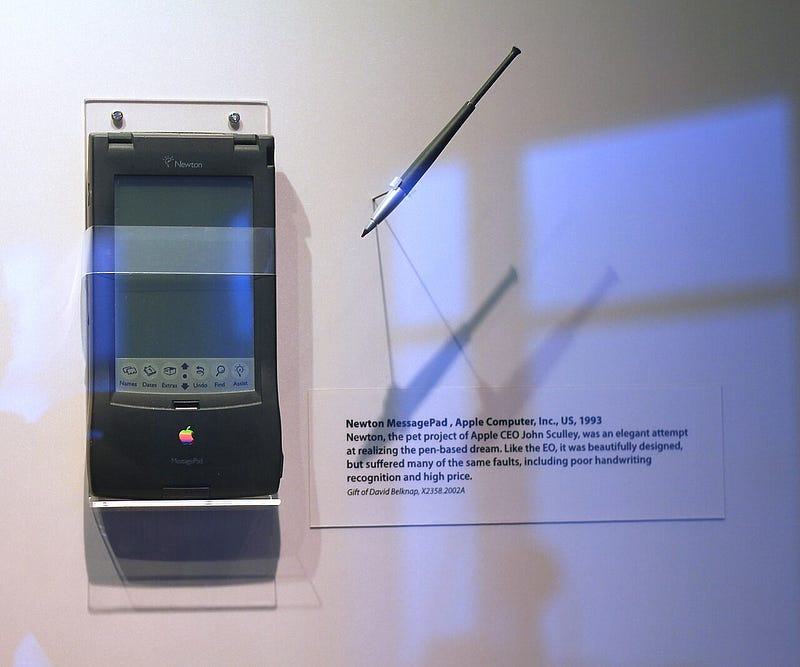
This is the practical lesson in General Magic’s story. A product can be right about the destination and still lose if it does not control, or cannot influence, the dependencies that make the trip possible.
1995 — public market, private constraints
General Magic went public in February 1995 and raised US$96 million in its IPO. The market briefly treated it as a bet on the next personal-computing platform.
The underlying service did not last. AT&T shut down PersonaLink in June 1996. General Magic later moved through other products and strategies before closing in 2002.
The disappointment was personal for people inside the company. Fadell has described how intensely he worked there and how the device’s poor sales affected him. The documentary preserves the emotion without requiring us to turn every remembered number into an audited account: a team believed it was building the next great consumer device, then watched a few thousand buyers prove otherwise.
Alumni carried the idea elsewhere
The company failed. Its people did not disappear.
Fadell joined Apple in 2001 and led the iPod effort before working on the first iPhones. Andy Rubin, who had worked on General Magic’s Envoy, later founded Danger and then Android. Kevin Lynch later led software work on the Apple Watch. Other alumni carried parts of the experience into Google, Microsoft, and the rest of the consumer-technology industry.
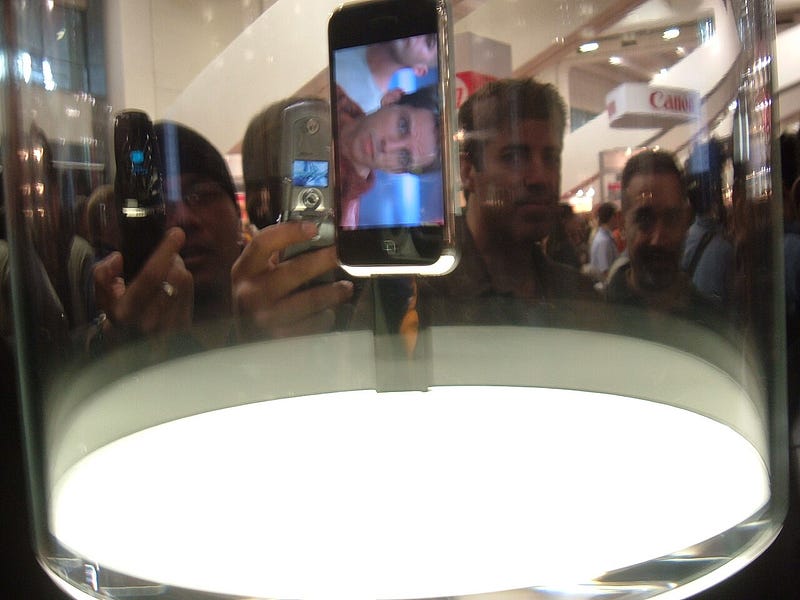
Apple did not reproduce General Magic’s devices. It shipped a product that could realize parts of General Magic’s vision under conditions General Magic never had.
The Magic Link is a record of dependencies the team could see but could not yet command. It needed a different decade, a network ready to fade into the background, and a company able to align hardware, service, and software.