A Professor's $1,000 Bet Built Hewlett-Packard
Two decades before venture capital existed as an industry - -a Stanford professor was already personally underwriting his students' startups
IT HISTORY
A Professor’s $1,000 Bet Built Hewlett-Packard
Two decades before venture capital existed as an industry — a Stanford professor was already personally underwriting his students’ startups
Silicon Valley has a brain, and it sits on an old horse farm in Palo Alto. For more than a century, the people, patents, and companies that run the tech industry — Google, Cisco, Sun, Yahoo, LinkedIn, Instagram, and tens of thousands more — have come out of Stanford University. This is the story of how that brain got built, in five parts.
A Sears Drill in the Trunk
In 1938, David Packard drove back to California with his new wife, Lucile, and a Sears Roebuck electric drill rattling in the trunk.
That drill was more than a household tool — it became HP’s first piece of production equipment, the thing that bored holes into the Bakelite panels of the company’s first product. Before venture capital, before “Silicon Valley” was even a phrase, before the whole mythology of the garage startup existed, there was one man in a Palo Alto shed with a department-store drill and $538 to his name.
Most retellings skip that part. They jump straight to the IPO, the billions, and the “HP Way” management philosophy that every tech company would later crib. The beginning is smaller and stranger than any of that: a professor tired of watching his best students leave, and two young engineers who decided to bet on each other.
Terman’s Frustration
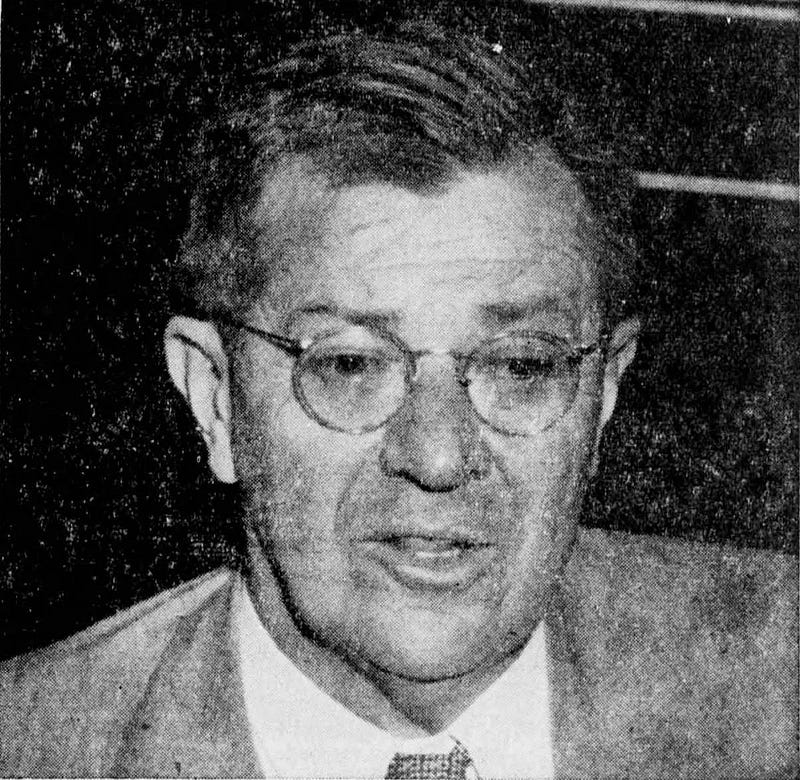
Frederick Terman had a problem.
It was the mid-1930s, and Terman — a Stanford electrical engineering professor — was watching a slow-motion talent drain. His brightest students graduated, looked around California, found nothing, and took the train east to General Electric, Westinghouse, RCA, Bell Labs. The jobs were all back in the industrial Northeast, three thousand miles from the orchards and open sky of the Santa Clara Valley.
To Terman, this was absurd. Here was Stanford, sitting on a peninsula of cheap land and good weather with one of the best engineering programs in the country. Why shouldn’t the industry come here? He set out to fix it himself, handpicking an elite group of graduate students and teaching them something no engineering professor had taught before — not just circuits and oscillators, but how to build a business. He arranged tours of Bay Area companies, brought in founders to speak, and told his students plainly to start their companies here, in the Valley, and create the jobs that didn’t yet exist.
Two of those students were William Hewlett and David Packard.
Two Students in the Lab
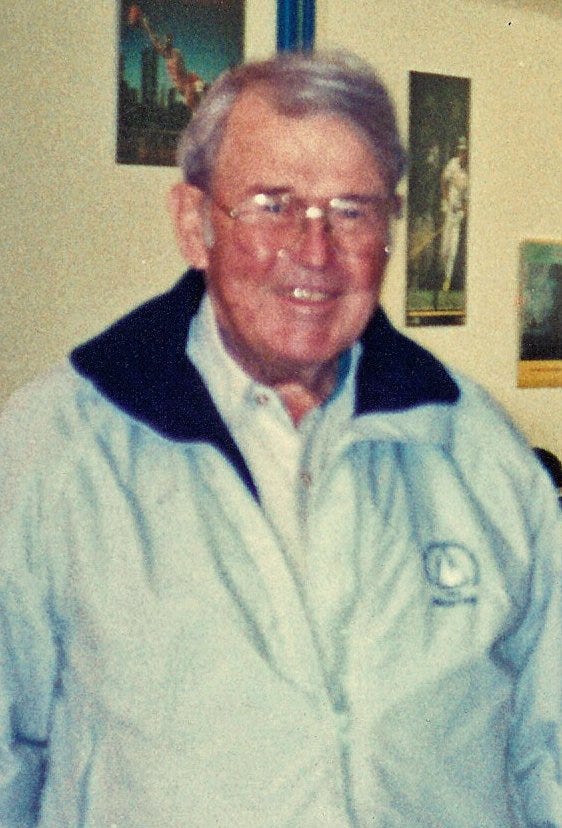
Hewlett was the technical prodigy — a kid from Ann Arbor whose father had died of a brain tumor when he was twelve, leaving him with a quiet intensity and a gift for precision. At Stanford, he had designed audio oscillators more stable than anything on the market.
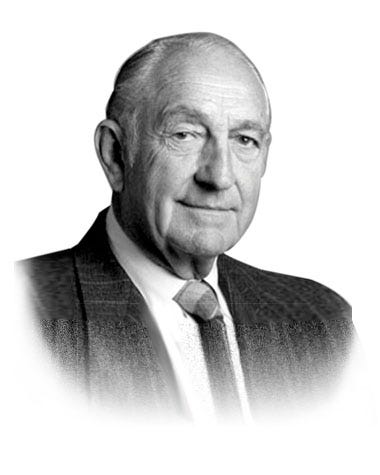
Packard was the organizer — from Pueblo, Colorado, student body president at Stanford, six-foot-five and sturdy and deliberate, the kind of person you would follow. The two had met on the football field in 1930, playing for Stanford’s freshman team, but the real bond formed in Terman’s graduate lab, where the professor threw them together on projects and watched the chemistry take.
Terman taught them to see engineering as a business problem, walking them through patent law, marketing, manufacturing, and hiring, and taking them on field trips to companies like Litton Engineering and Federal Telegraph — less to admire the technology than to study how the firms were organized. “Terman was the first to realize,” Packard later wrote, “that the business of electronics required more than just technical competence.”
A Coin Toss for the Name
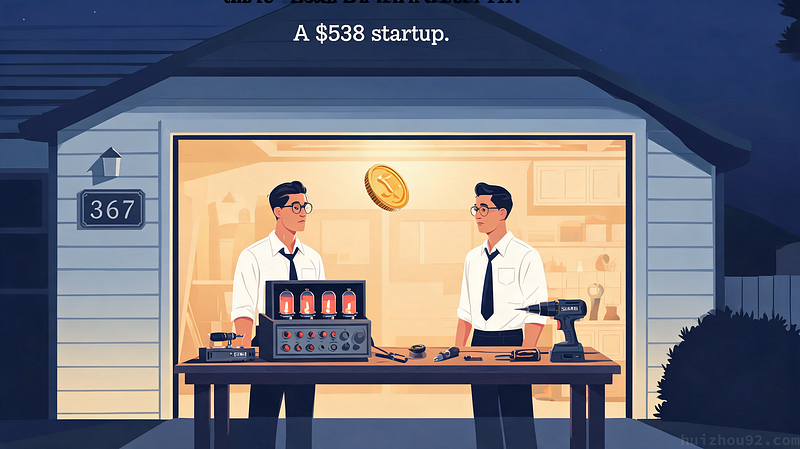
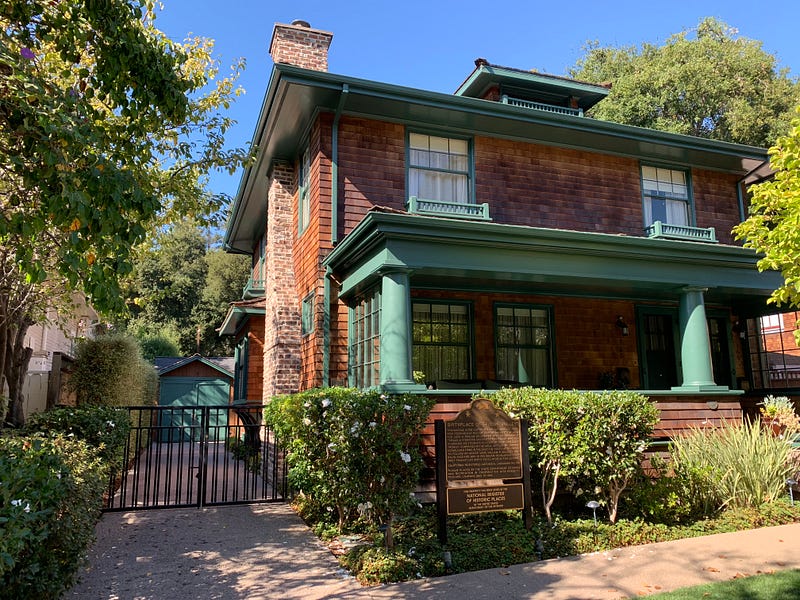
On January 1, 1939, Bill Hewlett and Dave Packard sat in Packard’s rented house at 367 Addison Avenue in Palo Alto and flipped a coin.
Whether to start a company was never in question — that had been settled months earlier in Terman’s office, where the professor had all but pushed them into it. The coin decided only the order of the names: Hewlett-Packard or Packard-Hewlett. Hewlett won.
They formalized the partnership with $538 in total assets, scraped together from their own pockets plus whatever tools they could round up: Packard’s drill, an old drill press of Hewlett’s, a used Sears-Roebuck lathe, a band saw, and an unheated one-car garage behind the Addison Avenue house. It measured twelve by eighteen feet, had no insulation, and forced them to work in coats through the winter while Lucile Packard kept the books at the kitchen table.
A $1,000 Bet
Terman didn’t just cheer from the sidelines — he put his own money in, loaning Hewlett and Packard $1,000, roughly $22,000 today. It was neither a university grant nor a formal investment, but a personal bet on two twenty-six-year-olds with an idea, placed by a professor who refused to let talent keep leaving California.
Packard quit his job at General Electric in Schenectady, where he had earned $110 a month, and came back west to draw an HP salary of $55. Hewlett, meanwhile, had been at work in the garage on the thing that would launch the company: his Stanford thesis, a resistance-capacitance audio oscillator, reborn as the HP Model 200A. It generated precise audio frequencies for testing sound equipment, and it was more stable, more reliable, and far cheaper than anything competitors sold. The Model 200A went for $54.40, against a nearest rival that charged over $400.
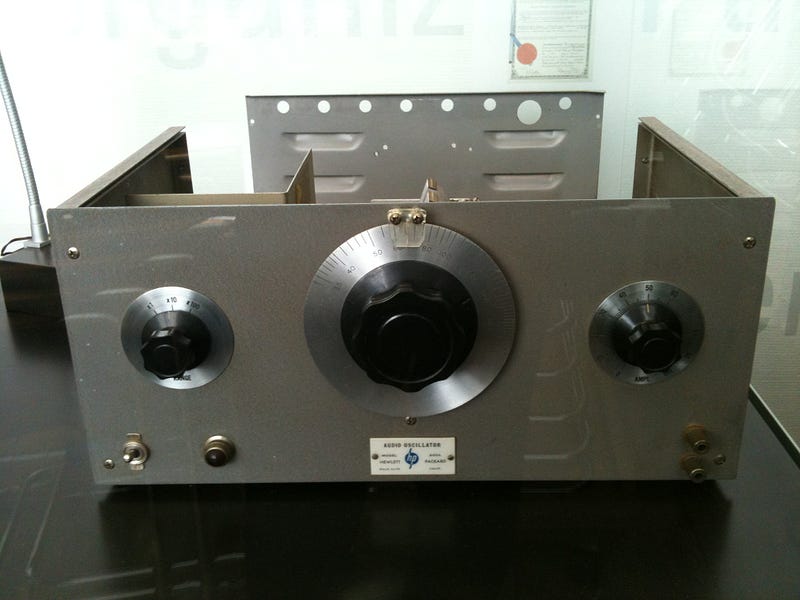
Terman went further than money, bringing clients — introducing the pair to engineers, purchasing agents, anyone who might buy an oscillator — so that he was professor, investor, and de facto head of business development before the title existed. Walt Disney’s studio bought eight of them, the Model 200B variant, to test the sound system for Fantasia, and that order put HP on the map.
By the Numbers
By the end of 1939, Hewlett-Packard had booked $5,369 in revenue and a $1,563 profit, a 30% margin. The next year they moved out of the garage.
By the end of World War II, HP had more than 100 employees and revenue approaching $1 million. The war had been a catalyst — oscillators, signal generators, and electronic measurement gear were all in heavy demand — but the deeper engine of growth was the culture Hewlett and Packard were building. In 1957, the same year the “Traitorous Eight” left Shockley to found Fairchild, HP went public, and its two founders became among the wealthiest men in America. The company that had started with a Sears drill and a coin toss was now worth millions and heading toward billions.
The HP Way
“The HP Way” was never a marketing slogan. It was a bet: that if you hired brilliant people and trusted them, they would do brilliant things. Out of that conviction came no time clocks, open-plan offices decades ahead of everyone else, profit-sharing for every employee, and an almost stubborn belief that a company existed to make a contribution, not merely money.
“Many assume that a company exists simply to make money,” Packard wrote. “While this is an important result of a company’s existence, we have to go deeper and find the real reasons for our being.”
That philosophy took hold industry-wide. Every startup campus and every stock-option plan owes something to what two engineers built in a twelve-by-eighteen-foot shed, where they invented not just a product but a way of working that the whole industry would copy, down to the foosball tables.
Full Circle
In 1977, Stanford opened the Terman Engineering Center, a $9.3 million building named for the professor who had refused to accept that talent belonged to the East Coast. In 1989, California designated the garage at 367 Addison Avenue as State Historical Landmark №976: “The Birthplace of Silicon Valley.”
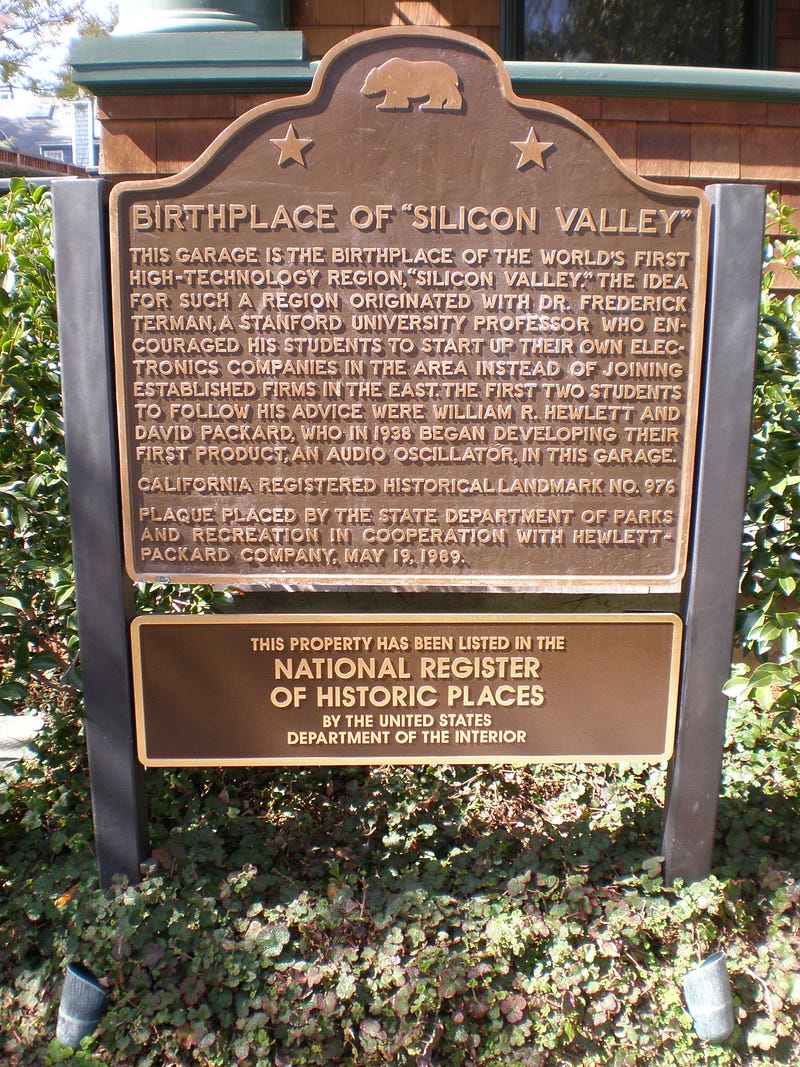
The plaque reads: “In this garage, William Hewlett and David Packard began the company that would help give rise to the modern electronics industry.”
What it leaves out is everything small — the drill, the coin toss, the $1,000 loan, the professor who taught his students that engineering was a business and California was the place to build it. Those details live in the cracks of the story, where the myth meets the mud: a marriage, a move, a department-store tool rattling in the trunk of a car, a chain of small bets that turned into the birth of everything.
Coming next: Post 5 — “From a Nobel Prize to a Search Engine — The Stanford Machine That Never Stopped.” How Shockley brought silicon, Hennessy scaled the model, and Google became just the latest in a 70-year chain reaction.
Support writers. All our nonprofit’s offerings here.
Click here to subscribe to the IT Chronicles newsletter.
Click for Wordsmith, Mystery Writing, Write Like Stephen King, more
By the EIC Susan Brearley with Ideogram